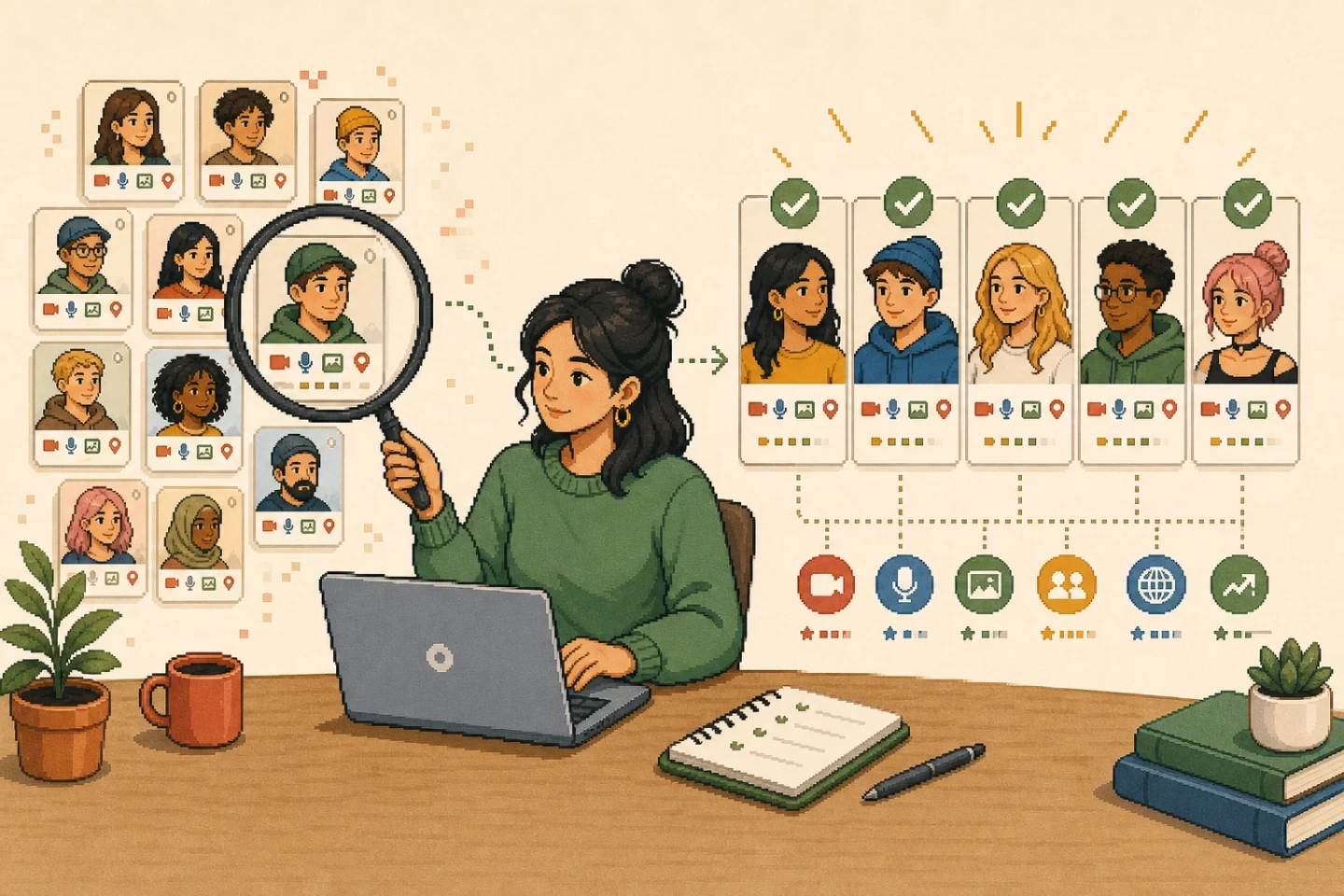
An influencer brief is a working document that tells a creator what the campaign needs without writing the content for them.
It should explain the goal, audience, content task, deliverables, creative boundaries, dates, disclosure rules, and review process. It should also show where the creator can use their own judgment.
We use a simple editorial framework called Our Five-Answer Test. After one read, a creator should be able to answer:
What is this campaign trying to achieve?
Who is the content for?
What do I need to make and when?
What is required, where am I flexible, and what should I avoid?
What happens after I submit or publish the content?
This is a Tomako editorial framework, not an industry standard or certification. Its purpose is practical: each missing answer points to a decision the brand still needs to make.
What is an influencer brief?
An influencer brief is the main set of campaign instructions shared with a creator.
Some teams call it an influencer marketing brief, influencer campaign brief, , or simply an . The names vary, but the job is similar: turn an internal campaign plan into clear direction for the person making the content.
The brand can protect key facts, timing, and compliance needs. The creator can understand the task, plan the work, and see which creative decisions are still theirs.
The brief should be specific enough to prevent avoidable surprises. It should not be so strict that every creator produces the same post.
Influencer brief vs campaign plan, contract, and media kit
These documents support different decisions. Combining all of them into one file often makes the work harder to understand.
Document
Main purpose
Main reader
Campaign plan
Defines the strategy, budget, channels, and internal ownership
Brand or agency team
Influencer brief
Turns the campaign into clear creator-facing direction
Creator and campaign team
Contract or agreement
Records payment, rights, ownership, cancellation, and other agreed terms
Brand, creator, managers, and legal teams
Creator media kit
Explains the creator's audience, work, services, and past partnerships
Potential brand partners
The brief can summarize important commercial terms so the creator understands the work. The final agreement should record the complete payment, rights, ownership, cancellation, and other legal terms.
A brief is also not a script unless the project truly requires scripted production. In most creator-led campaigns, the brief should define the message and boundaries while leaving the creator free to choose the hook, story, examples, and delivery.
How to write an influencer brief step by step
A strong brief does not come from filling every possible field. It comes from settling the decisions behind those fields before the creator begins work.
Use this decision map before you draft:
Decision
What the creator needs to know
Primary outcome
What the audience should understand, feel, or do
Audience
Their situation, problem, knowledge level, and reason to care now
Creator fit
Why this creator's audience, expertise, format, or style fits the campaign
Work item
Platform, format, quantity, dates, required elements, links, review stage, and destination
Creative boundaries
What is Required, Flexible, and Avoid, with the reason for each real restriction
Workflow
Question period, draft or concept review, decision owner, feedback time, revisions, publication, and reporting
Commercial handoff
Payment, usage, editing, raw files, exclusivity, cancellation, and other terms that belong in the agreement
If any row is still disputed, resolve it before sending the brief. A creator should not have to interpret an internal disagreement.
Step 1: Resolve the campaign decisions first
Start with one primary outcome. Several results may matter, but they should not all guide the content equally.
Write one sentence:
We want [audience] to [understand, feel, or do] after seeing this content.
Then complete the decision map above. Describe the audience in a way that can change the hook, examples, pace, or language. Explain why this creator is a fit using evidence that could not be sent to every account.
Do not use the brief to hide internal disagreement. If two teams want different goals or messages, resolve the conflict before sending the document.
A creator should not need to read several pages before understanding the job.
Keep internal strategy out of the main reading path unless it helps the creator make a real decision.
Step 3: Separate product truth from campaign language
Give the creator the facts they need to understand the product.
Separate verified product facts from suggested wording. Include support for claims that require evidence, and state what the creator must not imply.
Do not ask a creator to describe an experience they did not have. Do not supply a claim the brand cannot support.
The creator needs enough truth to explain the product in their own words. They do not need a list of slogans with no context.
Step 4: Classify each instruction
Review every creative instruction and place it under Required, Flexible, or Avoid.
Required: verified facts, legal duties, deadlines, links, or agreed deliverables the creator must follow.
Flexible: audience-facing choices such as the hook, setting, story, pacing, phrasing, examples, humor, or visual style.
Avoid: claims, topics, scenes, competitors, or actions that create a specific brand, legal, safety, or campaign risk.
Ask:
Does this protect a verified fact, legal duty, deadline, or agreed deliverable?
Does this choice depend on the creator's audience and style?
Would the campaign truly fail if the creator changed it?
Is the restriction protecting a real risk, or only a reviewer's preference?
This step exposes unnecessary control. It also tells the creator where their judgment is expected.
If almost every creative choice is Required, the brand may be buying scripted production rather than creator-led influence. That can be a valid project, but it should be described and priced honestly.
Step 5: Define each deliverable as a complete work item
For each deliverable, make sure both sides understand the platform, format, quantity, timing, required elements, review stage, and intended use.
"One video" is not a complete task. A YouTube integration, a short-form product demo, and an unposted UGC asset can require different work, rights, and review processes.
If usage rights or editing permissions are still undecided, flag the gap for agreement. Do not let a vague brief make a commercial decision by accident.
Step 6: Build approval around risk
Decide what must be checked before publication.
High-risk items may include:
product, health, or performance claims;
pricing and offer details;
disclosure;
regulated language;
safety instructions;
launch timing;
required links.
Do not use approval to rewrite every sentence in the brand voice. Review for agreed requirements, factual accuracy, compliance, and real risk.
Here is what one complete work item can look like:
Deliverable: One 30–45 second vertical video for the creator's Instagram Reels, due for draft review on September 12 and publication on September 18. Include the campaign link and show the product in use.
Required: Describe only the tested product features, include the agreed disclosure on screen and in the caption, and keep the launch date private until September 18.
Flexible: Choose the hook, setting, story, pacing, and wording that fit the creator's audience.
Avoid: Do not promise guaranteed results or compare the product with named competitors.
Approval: The campaign owner checks product claims, disclosure, link, and launch timing within two business days. One consolidated revision round is included. A new deliverable, new message, or new usage request is a scope change.
Usage summary: Organic reposting on the brand's owned social channels for 90 days. Paid media, editing beyond resizing, raw files, and extended use require separate written agreement.
This example keeps creative expression open while making the task, risk checks, timing, and commercial boundary visible. The complete agreement should still record the final payment, rights, ownership, cancellation, and other legal terms.
See how to negotiate with influencers for a fair process for defining scope, discussing price, and carrying the agreed terms into a contract.
Step 7: Read the brief as if you were the creator
Remove internal jargon. Define abbreviations. Check every link and date.
Look for conflicts such as:
"Use your own voice" beside a full script;
"Keep it natural" beside ten required messages;
"No revisions expected" beside several approval rounds;
a publish date that comes before the product arrives;
one link in the brief and a different call to action in the campaign plan.
Resolve every conflict before sending the brief.
Step 8: Treat the brief as the start of the working conversation
A brief should reduce avoidable uncertainty. It should not prevent useful questions.
Give the creator one contact and a clear period for questions. Record any agreed change in the brief or written campaign thread so both sides are working from the same version.
A version number or last-updated date can prevent an old attachment from becoming the working brief.
How much creative freedom should an influencer have?
Give creators control over the choices that depend on their audience.
A creator often knows which hook, story, pace, phrase, or example will feel natural on their channel. The brand knows which product facts, safety limits, legal duties, offer terms, and dates must remain correct.
That creates a useful split:
The brand owns truth, risk, and campaign constraints.
The creator owns audience-facing expression, unless the project was clearly agreed as scripted production.
Creative freedom does not mean ignoring the brief. Brand control does not mean removing every sign of the creator.
When deciding whether an instruction is Required, ask:
If the creator changes this detail, does the content become false, unsafe, late, noncompliant, or unable to complete the agreed task?
If the answer is no, the detail may belong under Flexible rather than Required.
When deciding whether something belongs under Avoid, ask:
Can we explain the specific risk this restriction prevents?
If the team cannot name the risk, the restriction may be a preference rather than a boundary.
How should the brief change by campaign type?
The core decisions stay similar. Their importance changes with the campaign model.
Campaign type
Add or emphasize in the brief
Common risk to prevent
Paid sponsored content
Deliverables, disclosure, review, publication, payment, usage, and exclusivity
The brief and agreement describe different jobs
Product gifting or seeding
Whether there is a posting obligation and how a material connection should be disclosed
Treating a free product as an automatic right to content, timing, revisions, or usage
Affiliate or performance
Base work, code or link, attribution method, reporting, commission, and payment schedule
Making the creator responsible for stock, site speed, checkout, offer quality, or attribution failures outside their control
UGC or licensed creator content
Publishing destination, editing permission, paid-media use, duration, and markets
Leaving the brand's intended use unclear or granting it by accident
For UGC or licensed content, say whether the creator will publish the asset or the brand will use it on its own channels. These decisions affect both the working brief and the commercial agreement.
How should a US influencer brief handle FTC disclosure?
Disclosure is not a final caption detail. It is part of campaign design.
For a US campaign, the brief should help the creator understand:
whether the campaign creates a material connection;
what that connection is;
how the connection should be disclosed in the chosen format;
who will check the disclosure before or after publication;
what should happen if the content does not meet the campaign's disclosure rules.
This section summarizes current FTC staff guidance. It is not legal advice, and the facts of a specific campaign still matter.
What is a material connection?
The FTC says a material connection can include a financial, employment, personal, or family relationship with a brand.
Financial relationships are not limited to cash. Free or discounted products, services, travel, or other perks can matter.
A creator may need to disclose a free product even when the brand did not require a post. The question is not only whether the creator feels influenced. The audience may evaluate the endorsement differently if it knows about the relationship.
Do not assume that followers already know about the partnership. Each post may reach people who did not see an earlier disclosure.
Where should the disclosure appear?
The FTC says a disclosure should be clear, easy to understand, and hard to miss. It should appear with the endorsement itself.
A disclosure may be missed when it appears only:
on a profile or About page;
at the end of a long post;
after a "more" link;
inside a large group of hashtags or links.
The format of the endorsement matters.
For image-based or story content, the disclosure may need to appear on the image and remain visible long enough to read.
For video, the FTC advises placing the disclosure in the video rather than relying only on the description. Using both audio and visual disclosure can help because some people watch without sound and others may miss on-screen text.
For a live stream, the disclosure may need to be repeated so people who join later can see it.
What wording should the brief require?
The FTC says simple terms such as ad, advertisement, and sponsored can be clear when they are placed where people will notice them.
It warns against vague or confusing terms such as sp, spon, or collab, as well as stand-alone words such as thanks or ambassador.
A disclosure should be in the same language as the endorsement.
Do not assume that a platform's disclosure tool is enough on its own. The FTC recommends considering the platform tool in addition to a clear disclosure in the endorsement.
There is no single phrase that guarantees compliance in every format and context. The brief should describe the relationship truthfully and give the creator format-specific direction.
What claims can the creator make?
An endorsement should reflect the creator's honest opinion and experience.
The FTC states that a creator cannot:
claim to have used a product they have not tried;
describe a poor experience as excellent because they were paid;
make a claim that would require proof the advertiser does not have.
That means the brand must control product truth before the brief reaches the creator.
Give the creator approved facts and source material. Mark unsupported claims under Avoid. Do not ask the creator to turn a product hope into a factual promise.
Who owns the disclosure check?
The creator needs to make a proper disclosure, but the brand should not treat disclosure as someone else's problem.
The campaign owner should give clear direction, review the planned format where appropriate, and define what happens if a required disclosure is missing or unclear.
Record that process in the brief and agreement. Do not wait until after publication to decide who was responsible.
Other markets may have different requirements. Check the rules that apply to the audience, creator, campaign, and platform.
Common influencer brief mistakes
Mistake
Why it fails
Fix
The brief is too vague
"Make an engaging video" leaves the audience, goal, task, and review process open to guesswork
Make the campaign decisions before asking for creative work
The brief is a script in disguise
Several creators may sound the same or be asked to say something unnatural
Protect facts and real risks; leave audience-facing expression to the creator
Every goal is a priority
One piece of content cannot optimize awareness, education, traffic, sales, production, and research equally
Choose one primary result and only the supporting signals the creator needs
Required, Flexible, and Avoid are mixed
The creator cannot tell a rule from a suggestion or warning
Classify each instruction and explain the risk behind real restrictions
The brief and contract disagree
Revisions, usage, or other scope can change between documents
Compare the final brief, commercial summary, and agreement before work begins
The review process is hidden
Unnamed reviewers and late feedback make the schedule unreliable
Name the decision owner, review stage, response time, revision limit, and approval criteria
Disclosure is reduced to one vague hashtag
A buried or unclear label may not explain the brand relationship
Match the disclosure to the relationship, format, language, and placement using current official guidance
The same generic brief goes to every creator
It ignores the audience, format, or style that made the creator a fit
Reuse the structure, but adapt creator context and creative opportunity
The brief contains conflicting instructions
More detail cannot resolve contradictory direction
Remove every mismatch before sending
Check the brief before you send it
Ask someone who was not part of the planning meetings to read the brief once.
Then ask them to answer:
What is the campaign trying to achieve?
Who is the content for?
What must the creator make and when?
What is Required, Flexible, and Avoid?
What happens after submission or publication?
Score one point for each clear answer.
5 points: Ready for creator review.
3–4 points: Fix the unclear or missing decisions.
0–2 points: Return to campaign planning before adding more copy.
Our Five-Answer Test is a Tomako editorial framework. It is not an industry benchmark, certification, or promise of campaign performance.
Its value is diagnostic. A missing answer tells the team exactly where the brief is weak.
Frequently asked questions
Who writes an influencer brief?
The brand or agency campaign owner usually prepares the first version.
Product, legal, social, and other teams may contribute facts or requirements. One person should edit the final document so the creator does not receive conflicting instructions.
The creator should have a chance to ask questions and agree to changes that affect scope, timing, rights, or payment.
How long should an influencer brief be?
There is no useful universal page count.
It should be short enough to scan and complete enough to pass Our Five-Answer Test. A simple campaign may fit into a few sections. A complex or regulated campaign may need more detail and linked source material.
Move full legal terms, internal strategy, and large asset libraries out of the main reading path.
Is an influencer brief the same as a creative brief?
They can overlap.
A creative brief often guides the creative idea across a campaign. An influencer brief adapts campaign direction for a specific creator collaboration.
It adds creator-facing decisions such as the content task, platform needs, creative freedom, disclosure, review, and commercial handoff.
Once the brief is ready, those decisions can also guide creator search and outreach. Tomako currently stores the campaign objective, target audience, market, budget range and currency, deliverables, requirements, and exclusions as part of a creator outreach activity.
Keep a human review step for creator selection and outreach.
A clear brief cannot guarantee campaign results. It gives the brand and creator a shared starting point, exposes missing decisions, and reduces avoidable rework.
Tiny is a co-founder of Tomako, working across the full path from growth strategy to channel execution. His experience spans influencer marketing, affiliate marketing, SEO/GEO, and paid acquisition. As an indie maker and creator, he is especially interested in how small teams can make better growth choices with limited resources. On the Tomako Blog, he writes about channel decisions, practical execution, and lessons from building and growing products.
 Tiny