Platform-shaped image set
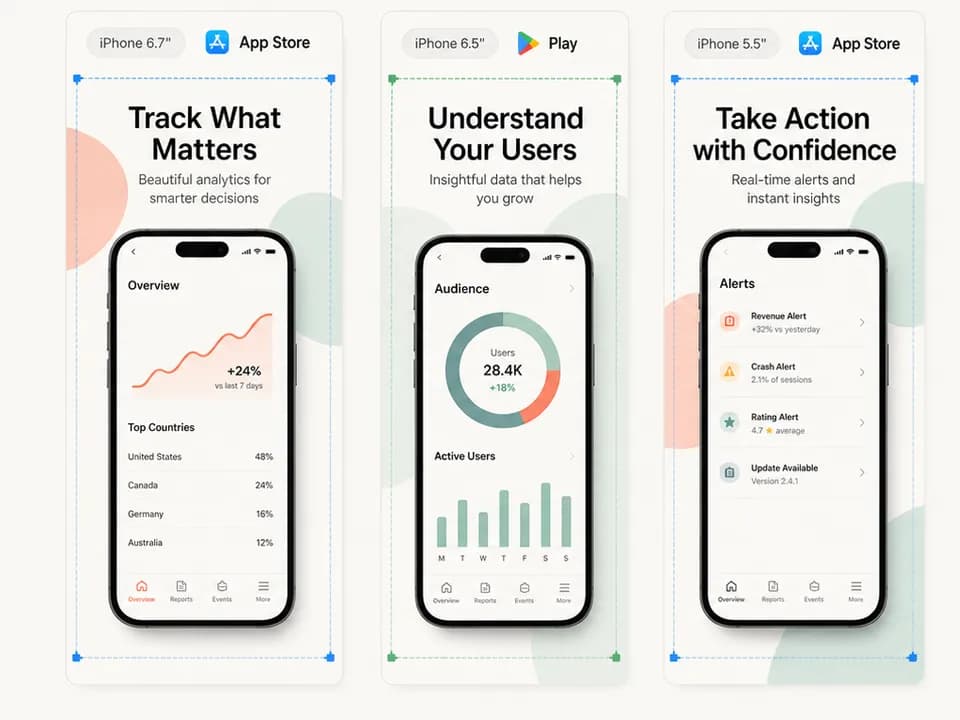
Generate up to 10 App Store screenshots, or a Google Play feature graphic plus up to 8 phone screenshots, so you can judge the full set early.
Tool task
Create a coherent screenshot set, feature graphic direction, and benefit-led listing visuals with product context before checking the latest store rules.
Upload real UI screenshots. A cloud Agent uses Skills-OL to fetch supporting context, plan the complete set, and submit live image tasks.
Generate up to 10 App Store screenshots, or a Google Play feature graphic plus up to 8 phone screenshots, so you can judge the full set early.
Select one listing image and download a PNG for team review, store console upload, or design critique.
Download an SVG wrapper that preserves the generated image, dimensions, and prompt metadata for review and design polish.
UI screenshots are required visual source material. A URL is optional brief input for public context, so avoid private data or unauthorized brands in screenshots.
Missing URLs, missing screenshots, unsupported file types, and export failures return actionable messages instead of empty creatives.
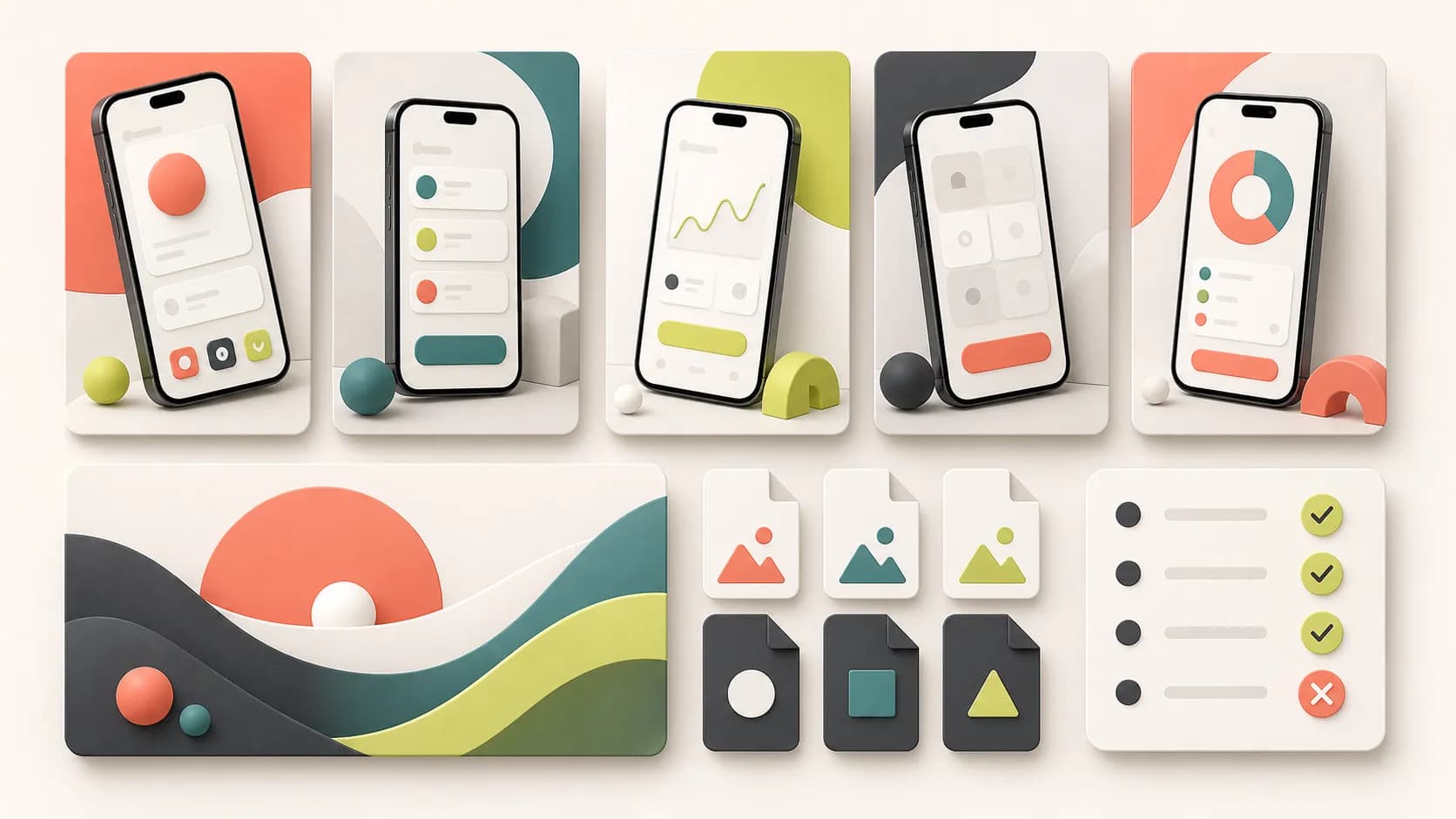
Manual templates often reuse one composition across App Store portraits, Google Play phone shots, and feature graphics.
Tomako starts with the selected platform and layout, so you can see how each asset shape changes the composition.
Starting from blank artboards makes every headline, size, and visual direction feel expensive to test.
Real UI screenshots are enough to produce a first creative set grounded in the actual interface, so teams can filter direction before design polish.
Many generators only export flat PNGs, making later copy, color, or screenshot changes awkward.
Each live image result can be downloaded as PNG, with an SVG wrapper carrying image and prompt metadata for design handoff.
Some tools imply generated assets are ready for store approval and skip policy, privacy, trademark, or sizing risk.
The page and result guidance state that final platform and brand review is still required.
Uploading unreleased product screenshots to unknown tools makes it hard to reason about file handling.
This page states when screenshots are sent to the image task, so teams can remove private or unlicensed content before generation.
You must upload local UI screenshots. Product URL, App Store or Google Play links, product name, and selling points provide supporting context for title, description, and page-summary clues.
Apple App Store and Google Play directions are supported, including complete screenshot sets, portrait screenshots, and feature graphics.
This version uses a cloud Agent and Skills-OL to submit live image tasks, but it does not connect to App Store Connect or Google Play Console.
If a screenshot includes test accounts, real users, private data, or unauthorized brands, redact it before use.
If no result appears, check that the URL is not empty, the uploaded file is PNG/JPG/WebP, browser file reading is allowed, and the selected input source matches your data.
Before real submission, review the latest platform dimensions, review policies, trademark or copyright permissions, privacy content, copy claims, and readability on target devices.
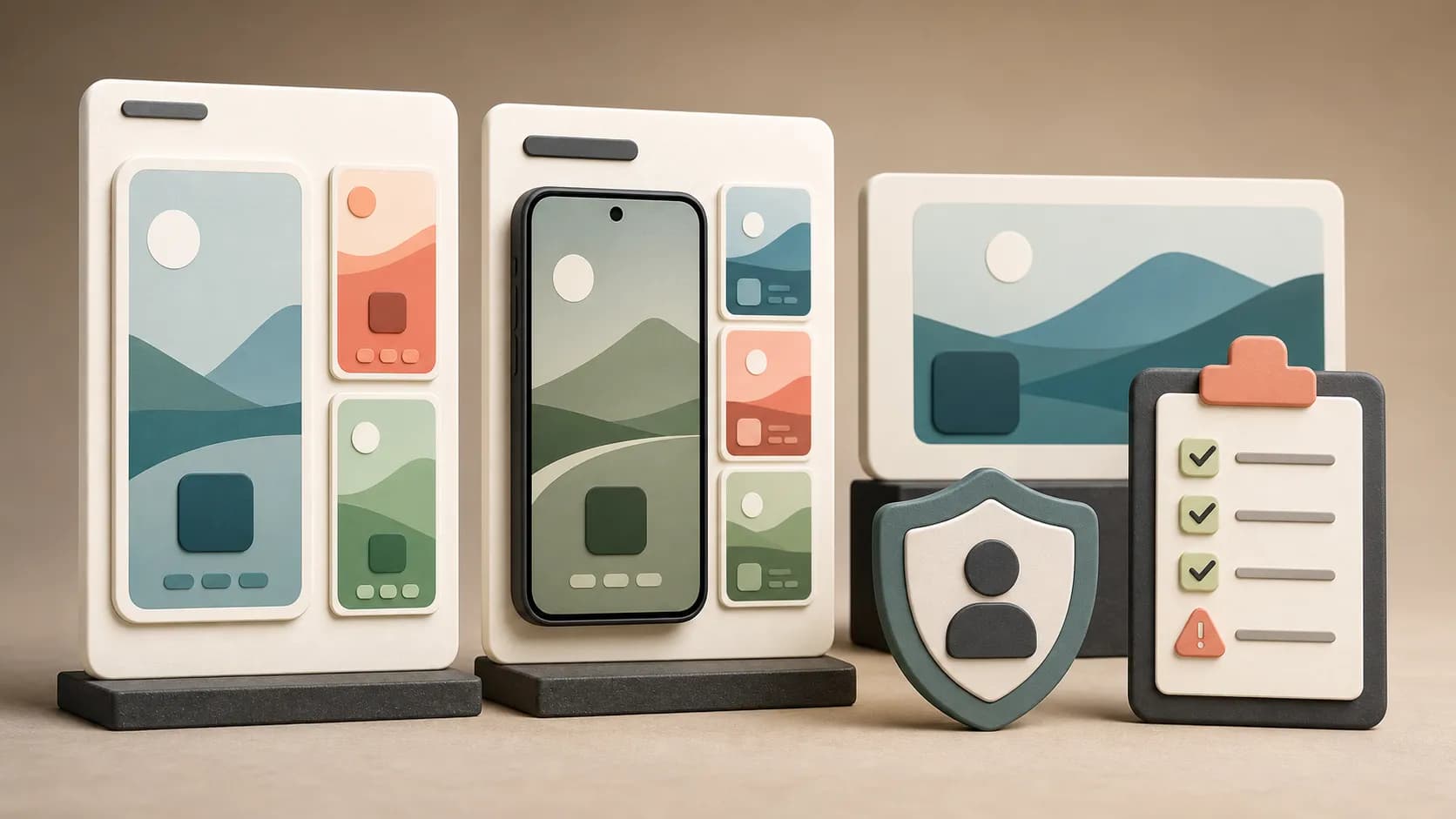
Use PNG as a direction image or review image. First confirm whether the first screenshot explains the core user benefit clearly.
Hand the SVG wrapper to a designer when the team needs prompt traceability, final product screens, brand fonts, store whitespace, or localized variants.
Do not blindly reuse one image across App Store and Google Play. Portrait screenshots, iPad shots, and feature graphics need separate composition checks.
If a generated image feels crowded, remove small labels, secondary features, and long subheadlines before adding more decoration.
Before uploading to a real store console, check the latest official specs and review guidance for size, content, privacy, trademark, copyright, and exaggerated claims.
Indie builders preparing first App Store or Google Play listing assets and needing a fast visual direction.
Growth teams comparing ASO screenshot, benefit-led creative, and feature graphic styles before launch.
Product teams turning new-version UI screenshots into store update assets for release planning or campaign review.
Designers receiving a rough product brief and generating a low-fidelity direction before final artboards.
Remote or outsourced teams aligning on copy, composition, and brand colors with PNG/SVG files.
Launch teams checking whether app icons, store screenshots, and social assets use the same visual language.
It fetches public title, description, OG metadata, headings, and a short page summary to infer product benefits and screenshot copy. Logged-in, blocked, or anti-scraping pages may fail.
When UI screenshot mode is selected, the screenshot is sent to the image task as a reference. Do not upload real user data, unredacted admin screens, customer information, or unauthorized brand assets.
It can be used for upload preview or team review, but before publishing you still need to check the latest platform dimensions, content policy, privacy, trademark, and copyright requirements.
The SVG is a handoff wrapper for the generated image. It preserves the image reference, dimensions, and prompt metadata so a designer can review and refine the direction.
No. Upload real UI screenshots first. Product URL or product name can add context, but cannot replace real product screens.
No. It generates visual results and does not connect to App Store Connect, Google Play Console, or live policy APIs. Review official store guidance before submission.
Store screenshots are usually reviewed together with the app icon. If the icon package is not ready yet, prepare app icon assets first and keep the listing visuals consistent.