Feedback clusters
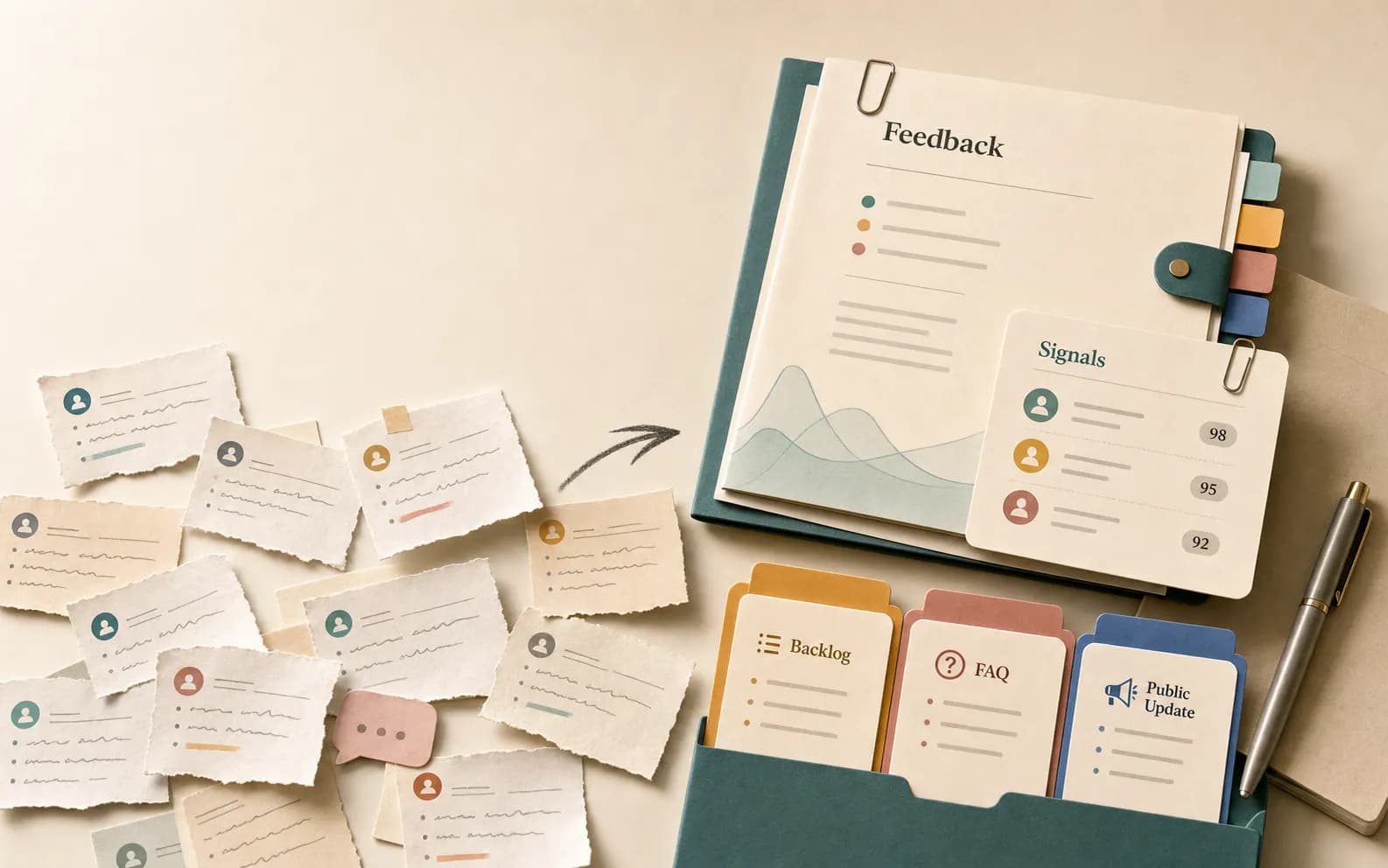
Classify comments into pain points, objections, competitors, feature requests, pricing feedback, and copy feedback with evidence snippets.
Tool task
Turn post-launch comments, DMs, and trial feedback into a learning system: classify user language, find beta invite candidates, capture backlog evidence, and turn objections into landing page copy.
Paste Reddit, Indie Hackers, Product Hunt, X, or Discord comments. This review prototype classifies feedback into pain points, objections, competitors, feature requests, pricing feedback, and copy feedback, then suggests reviewable next steps.
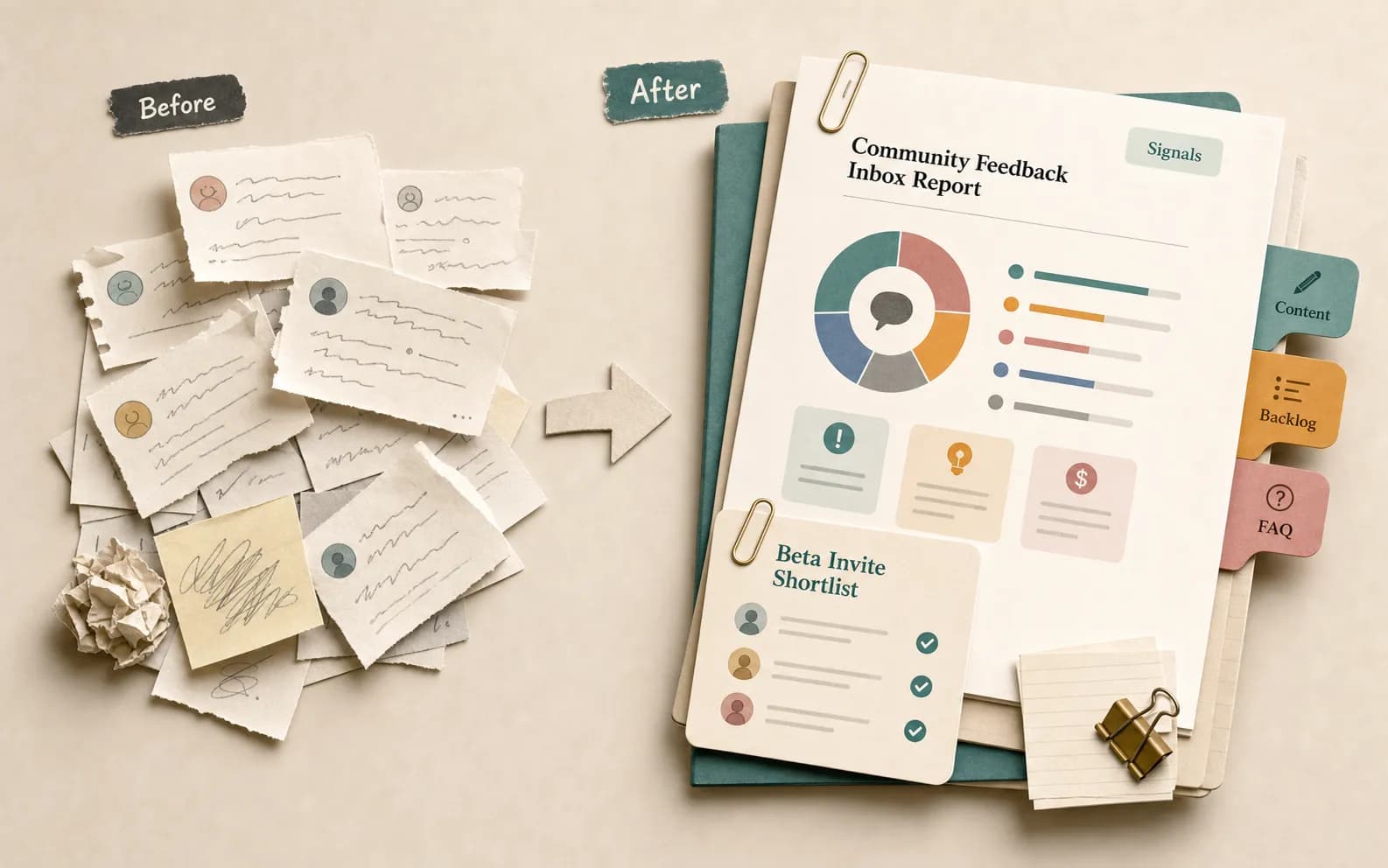
Classify comments into pain points, objections, competitors, feature requests, pricing feedback, and copy feedback with evidence snippets.
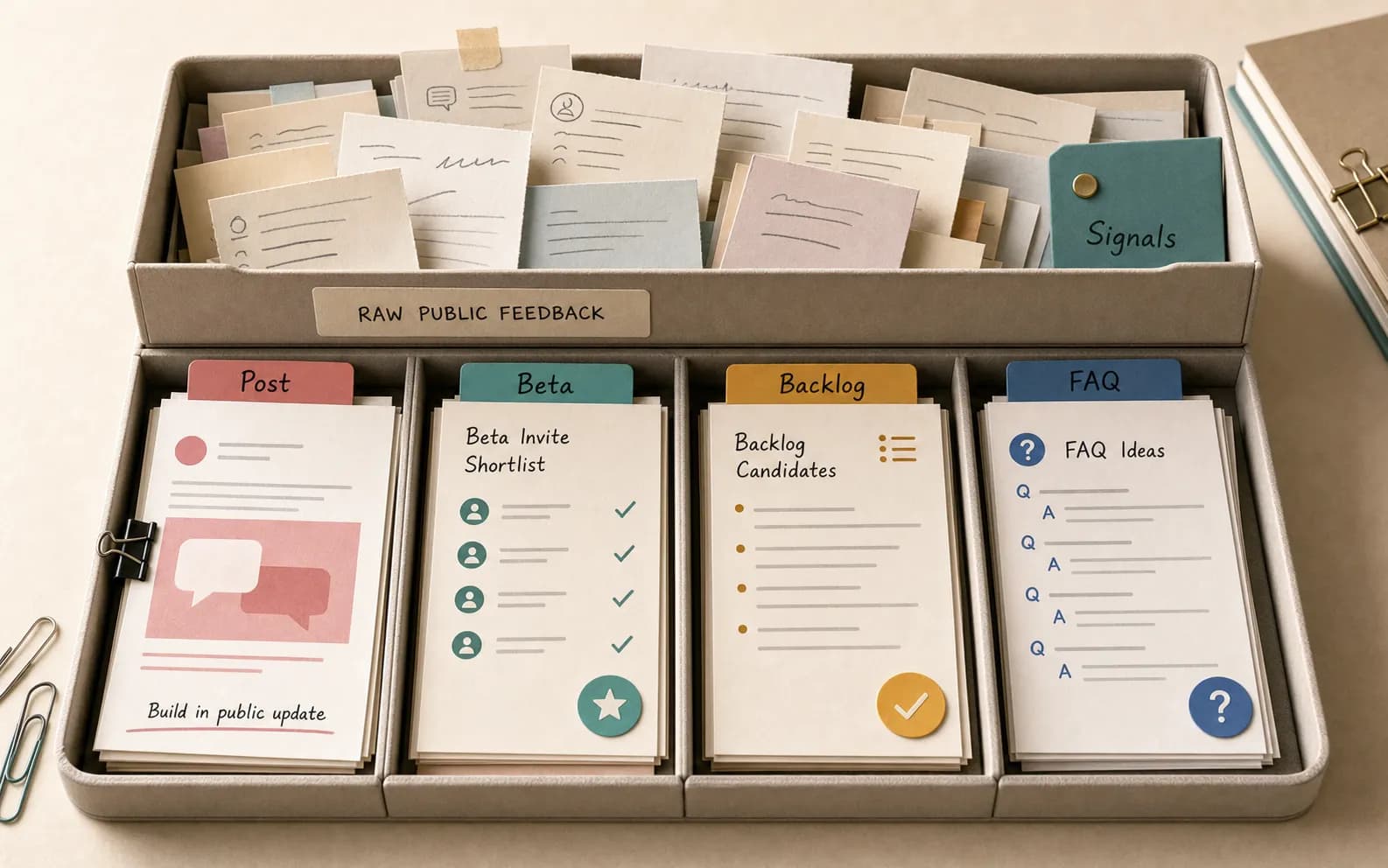
Flag people who show a clear workflow, trial intent, or useful follow-up question, with an editable DM draft.
Turn high-quality comments into the angle, hook, and user language for the next public building post.
Convert repeated feedback into backlog hypotheses, landing page FAQ, and objection-handling material.
Useful for indie founders, early SaaS teams, developer tools, AI tools, open-source brands, and build-in-public creators.
Best for post-launch comments, DMs, trial feedback, Product Hunt comments, Reddit discussions, and Indie Hackers replies.
This is not a public voting board. It turns real community language into the next product and GTM decision.
If comments include usernames or sources, beta leads become more useful. Anonymous comments can still be clustered.
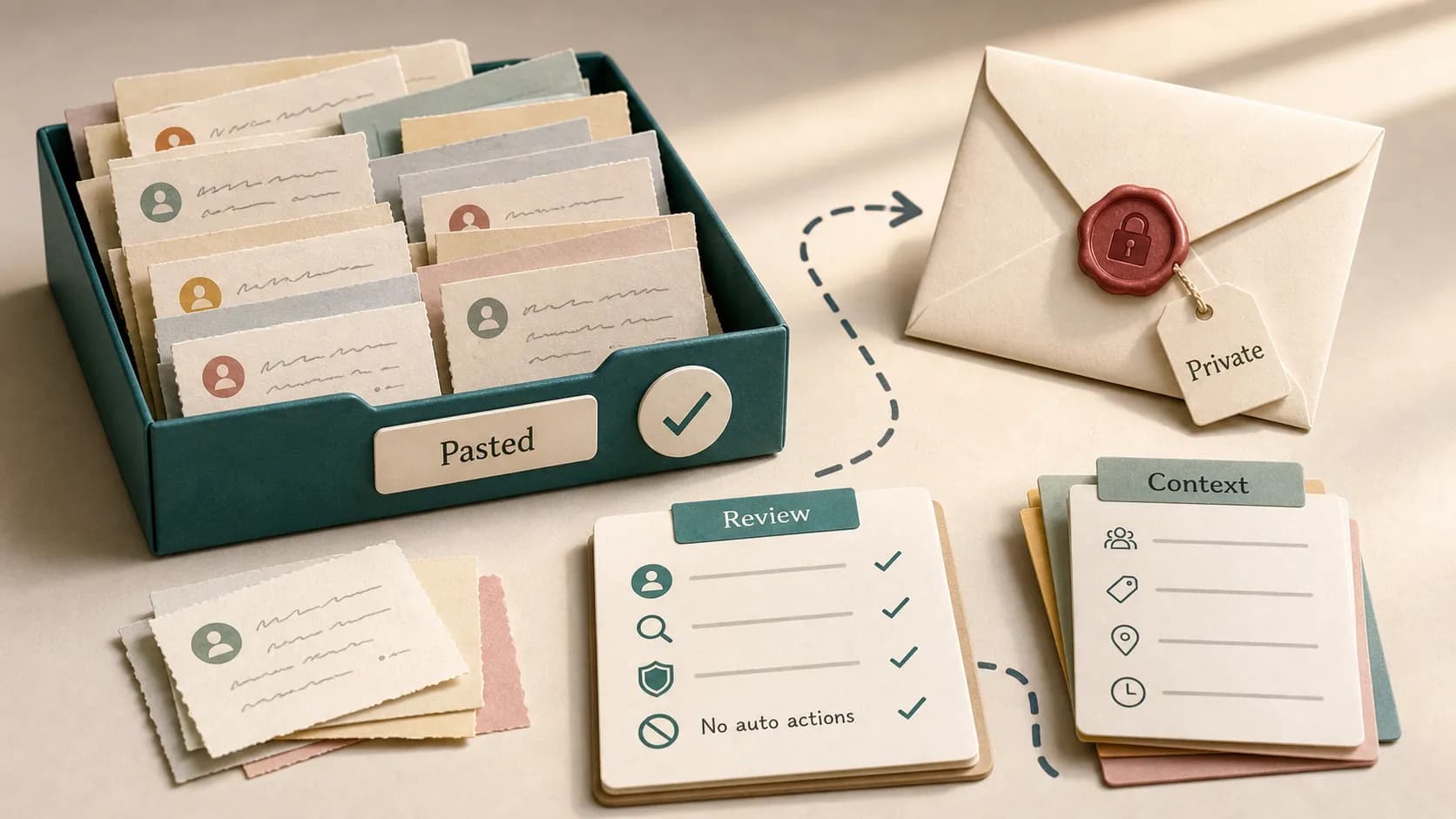
It does not connect to Reddit, Indie Hackers, Product Hunt, X, or Discord APIs, and does not bypass platform rules.
It does not message users automatically. Beta invites are candidate leads and drafts for manual judgment.
Classification uses local heuristics, not a formal AI research result. Review original comments before adding backlog items.
Before publishing build-in-public content, remove usernames, private details, and anything that could misquote a user.
Send content angles to the Social Platform Asset Adapter and rewrite them for X, LinkedIn, Reddit, or Product Hunt follow-up.
Turn high-signal beta candidates into a manual DM list. Ask about the workflow before inviting them to try the beta.
Move objections into landing page FAQ and comment replies instead of leaving them in internal notes.
Write repeated feedback as a hypothesis, evidence count, and acceptance criteria before adding it to backlog.
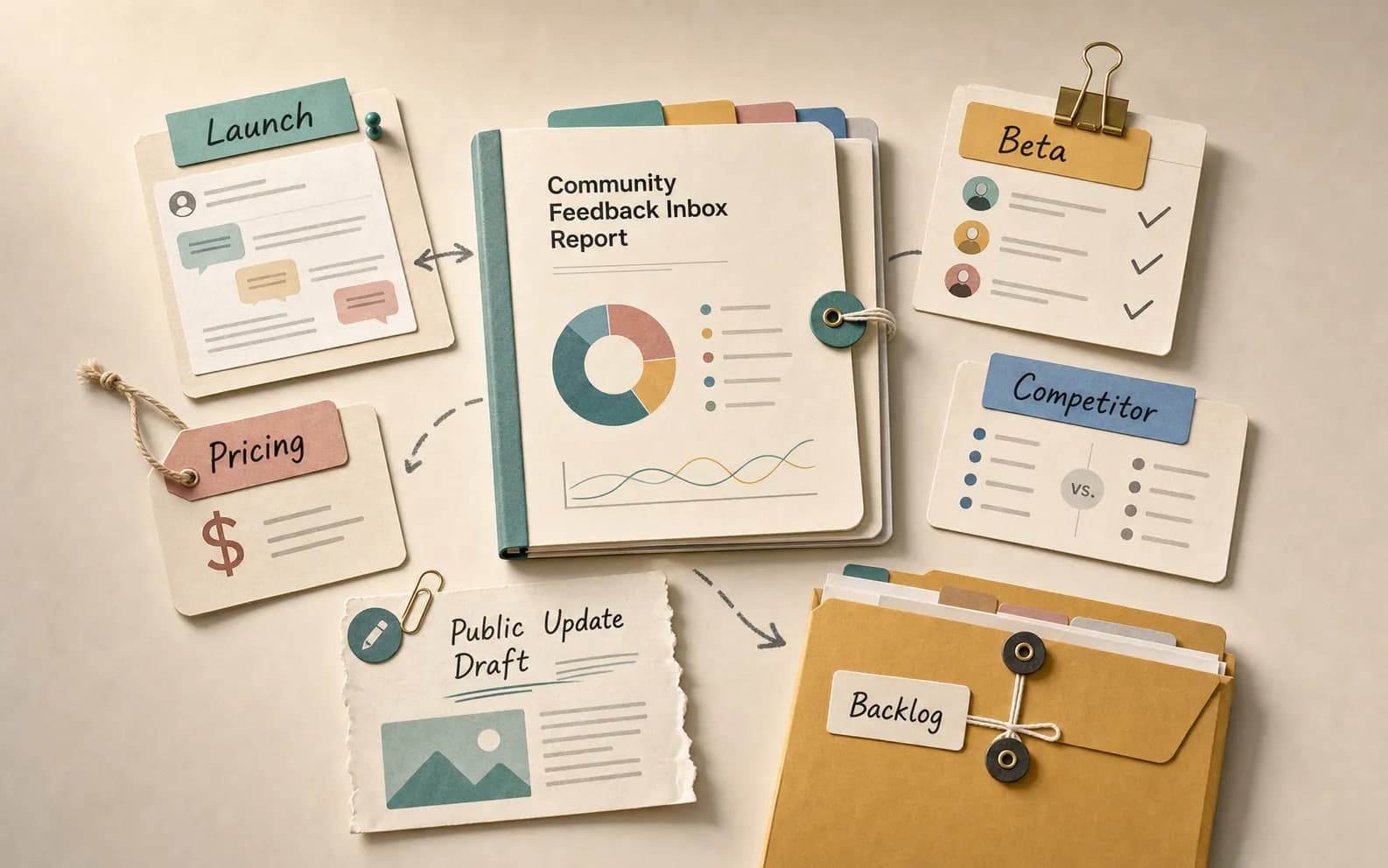
Classic feedback boards focus on collection and voting. This tool focuses on turning community comments into content, beta users, and the next validation loop.
The result includes evidence snippets, so you can return to the source instead of prioritizing from vague tags.
When users are confused, concerned, or comparing alternatives, that language becomes FAQ, reply, and landing page material.
Community growth breaks when real conversations become bulk workflows. Tomako organizes signals while keeping DMs and product decisions human.
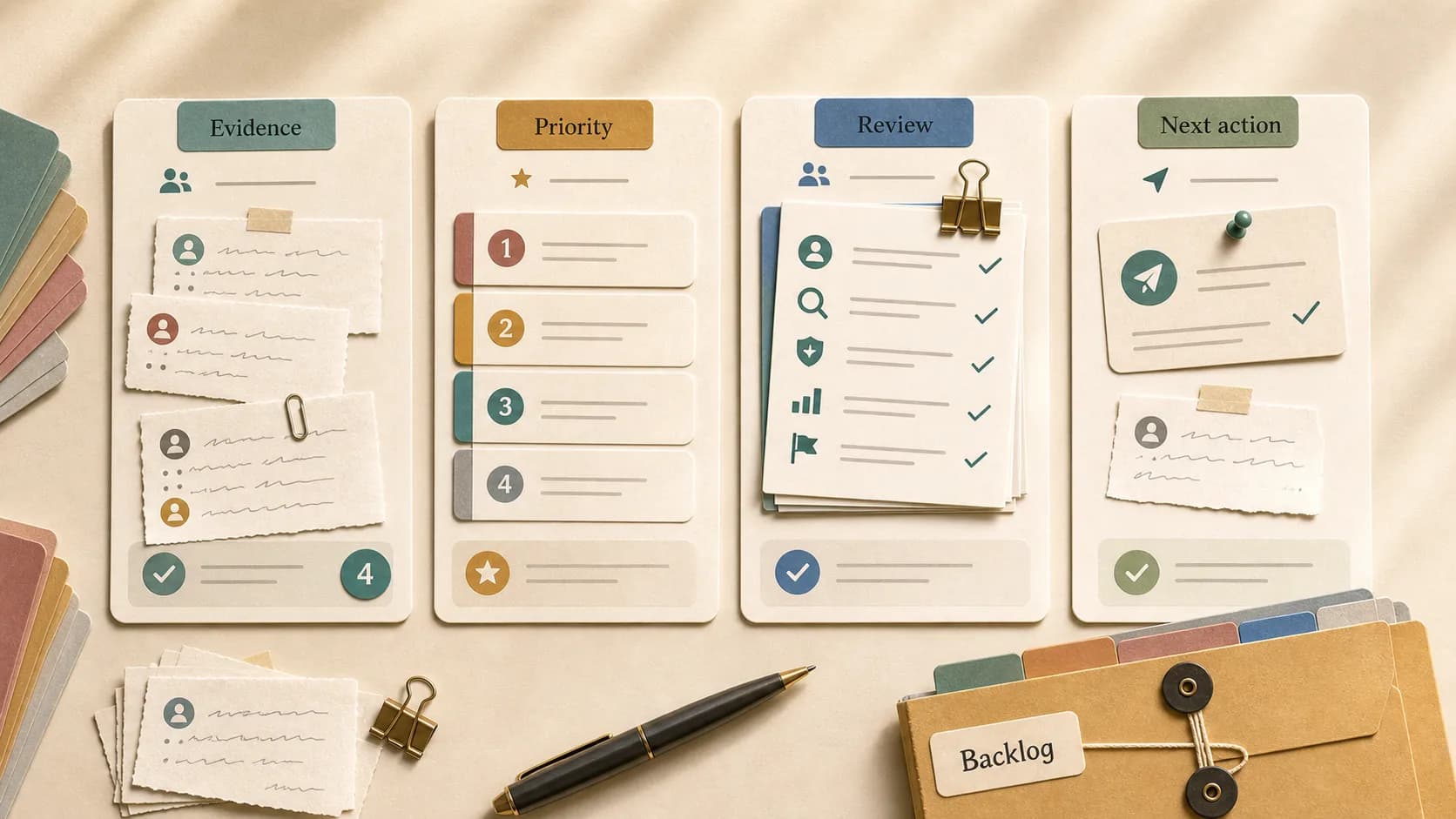
Evidence: every cluster should point back to original comments, not just abstract labels.
Restraint: feature requests should be merged and validated before entering a roadmap.
Actionability: results should become beta invites, FAQ, content angles, or backlog hypotheses.
Boundaries: the tool should be clear about no scraping, no auto-DM, and no replacement for product judgment.
Workflow: community feedback should return to GTM instead of staying as one-time exposure data.
No. The current version only processes comments you paste manually, which keeps platform rules, login access, and privacy boundaries clearer.
Those products are stronger for long-running feedback portals, roadmaps, and voting. This tool is lighter and focuses on turning community launch comments into GTM learning assets.
Not directly. The report gives candidates, evidence counts, and next actions, but you should still review original comments and product strategy.
Yes, as a shortlist. Final outreach should stay manual, especially to avoid mass-DM behavior.
After organizing community feedback, turn one high-quality comment into a user interview record or rewrite the content angles for platform-specific follow-up.