Relevant community map: which subreddits, X discussions, and HN threads are worth reading first.
Tool task
Community Pain Point Extractor
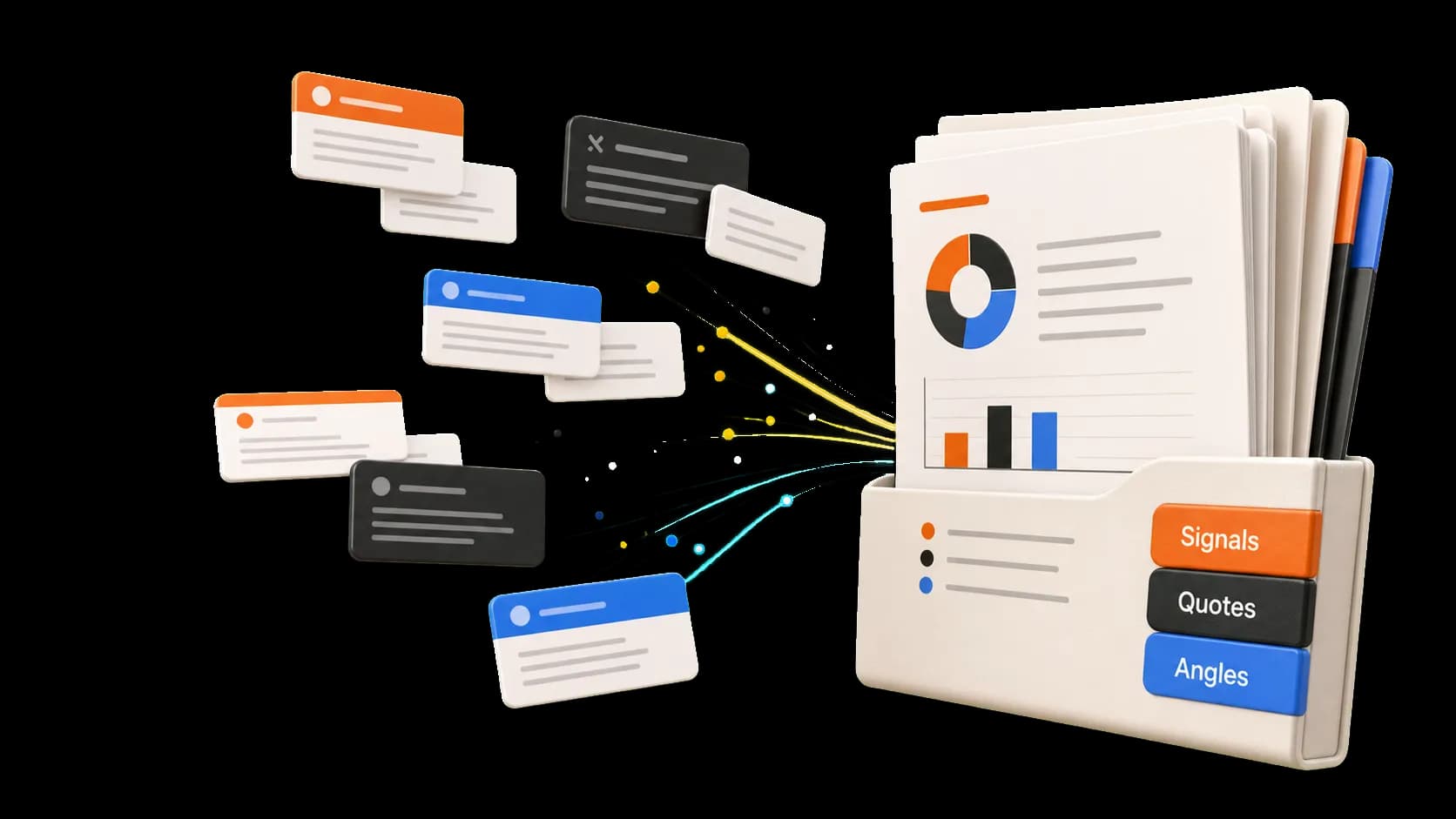
Turn a rough product direction into a reviewable community pain report. Find public discussions and repeated complaints first, then extract quotes, paid-intent signals, small feature bets, and landing page angles.
Tool workspace
Enter inputs, review the output, then use the page guidance for the next step.
Start here
A direction is enough for the first pass. The tool uses public information only; private communities, logged-in content, and unverifiable quotes are treated as missing evidence.
The community pain report will appear here
The agent will inspect public Reddit, X, and Hacker News discussions, then summarize repeated complaints, user quotes, paid-intent signals, and landing page angles.
What you get
Not “users need better UX”: evidence you can actually inspect
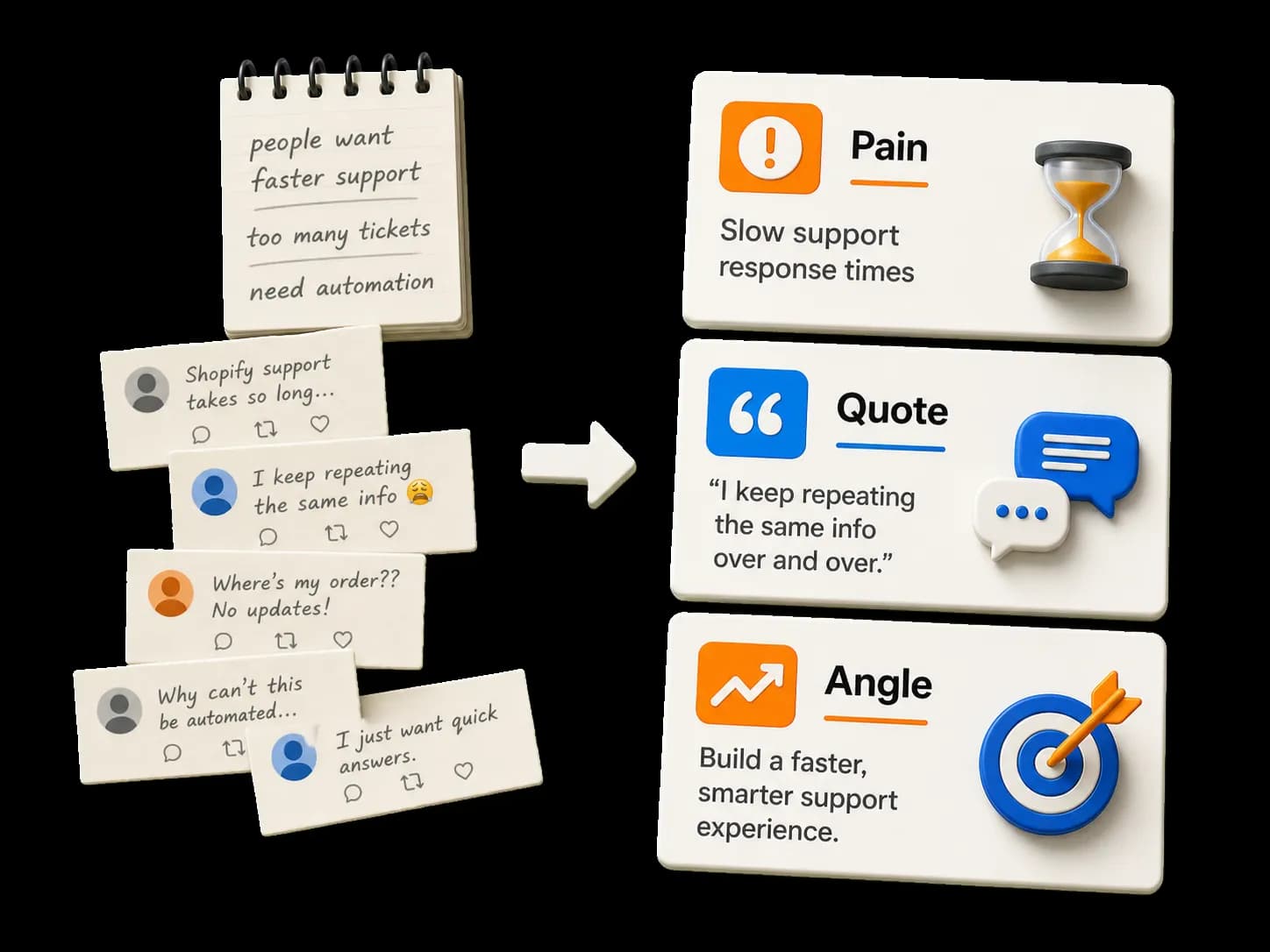
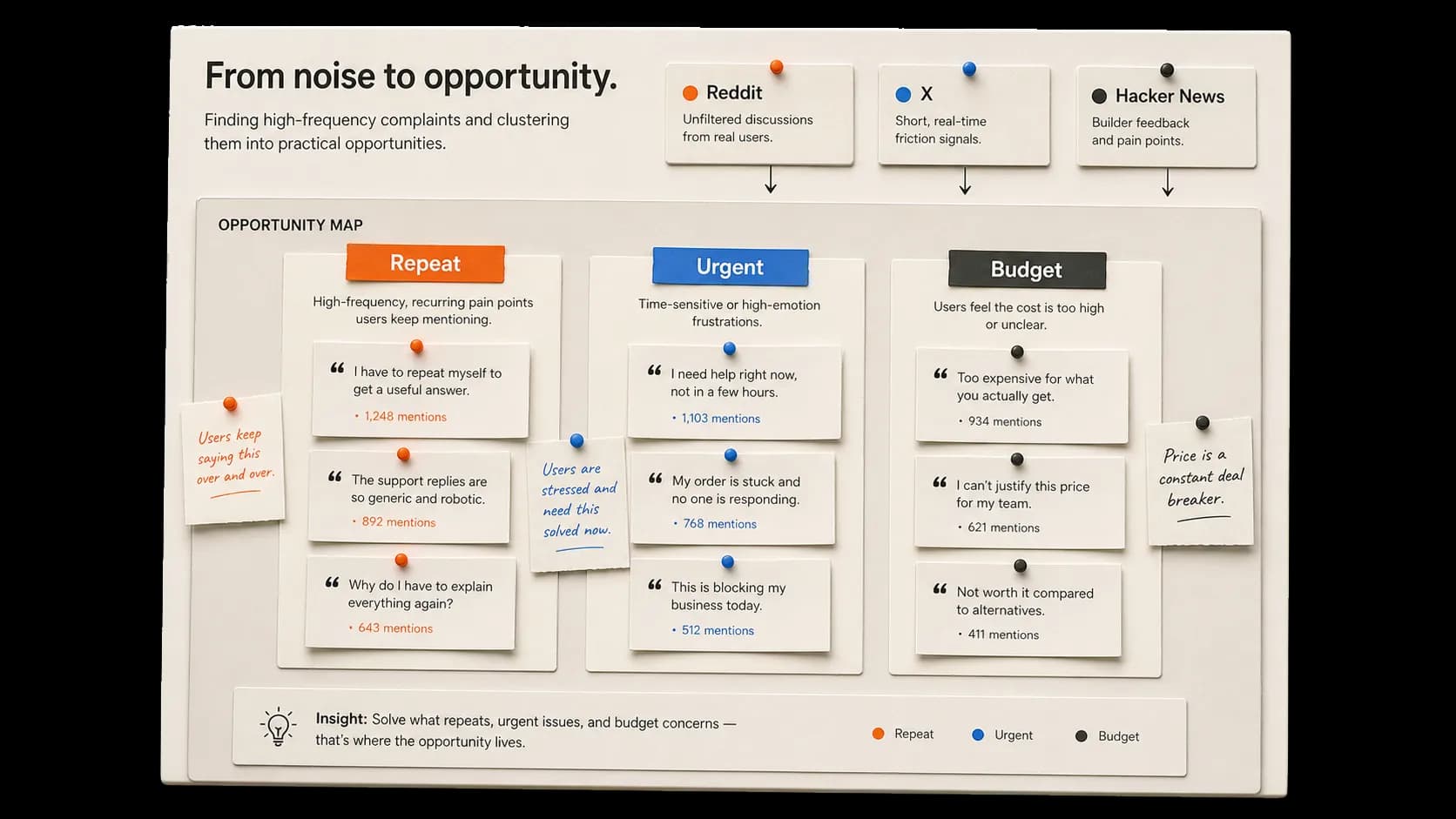
Repeated complaints and quotes: grouped by frequency, severity, and source so you can hear how users describe the pain.
Willingness-to-pay read: separates budget clues, alternatives, pricing complaints, and buying language from general noise.
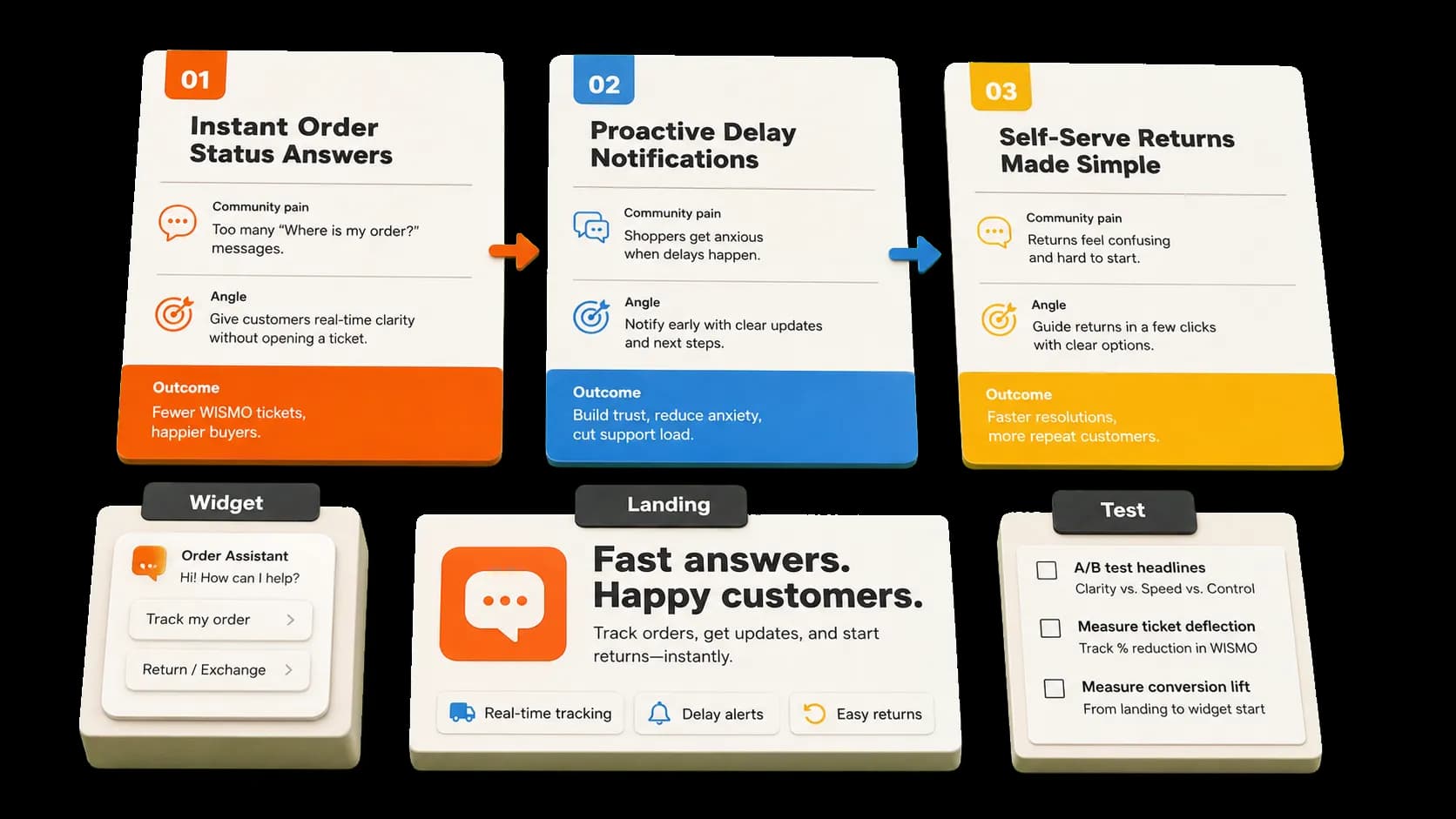
Entry feature and page angles: turns pains into a small widget, hero promise, CTA, and next validation experiment.
Good-tool standard
A good pain finder proves the complaint repeats
Specific sources: the report should point to communities, posts, or public search evidence instead of vague summaries.
Reviewable quotes: short quotes need source labels and links when possible; unverifiable material stays as an evidence note.
Frequency tiers: separate one-off venting from recurring complaints and high-emotion pain.
Actionable output: the final report should lead to an entry feature, landing page angle, and validation test.
Support and boundaries
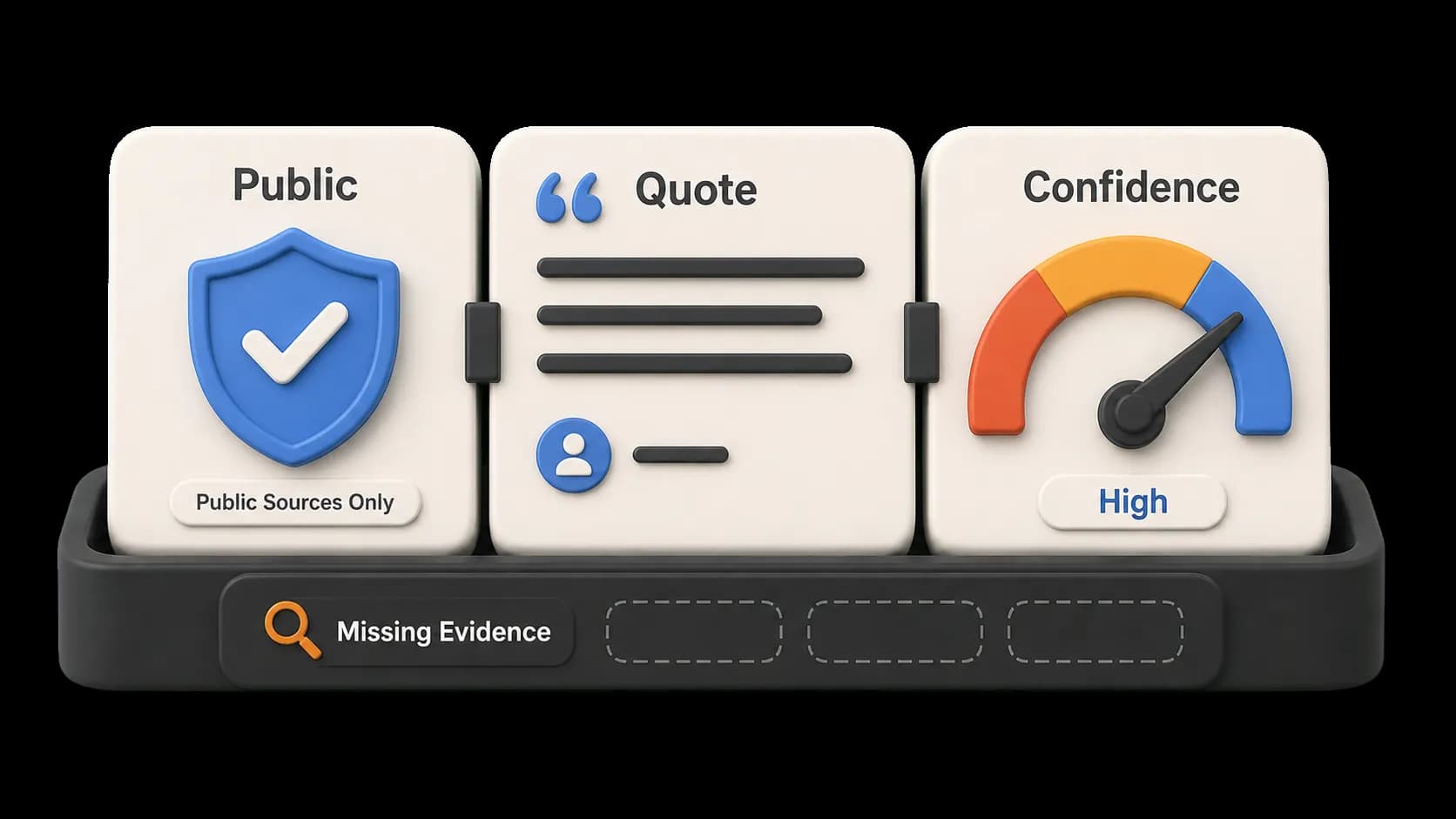
Public signals only, with missing evidence called out
Supports Reddit, X, Hacker News, and public web search signals; platform access can affect completeness.
Does not access private, logged-in, deleted, paywalled, or restricted content. You remain responsible for platform rules and user privacy.
Frequency is a research read, not an exact count. The report uses low / medium / high to express relative strength.
When public quotes are insufficient, the tool lists missing evidence and next interview questions instead of inventing clean conclusions.
Result guidance
Use the report for the smallest entry and page test
Pick one high-frequency, high-severity cluster that can be solved with a small feature, not every complaint at once.
Turn user language into a landing page hero promise, then support it with source context and a concrete scenario.
If paid intent is weak, test interviews, a waitlist, or concierge delivery before building the full SaaS.
If one community repeats the same complaint, test a focused widget, Chrome extension, or plugin before expanding scope.
FAQ
Boundaries before you use it
Does this crawl all of Reddit, X, and Hacker News?
No full-crawl promise. It researches public searchable communities, posts, and web signals, then marks gaps when sources are thin.
Are the user quotes real direct quotes?
The report is instructed to show direct quotes only when they are verifiable and to include source labels or links when available. Unverified material should be written as an evidence note.
How reliable is the willingness-to-pay read?
It is directional. The agent looks for budget language, alternatives, pricing complaints, and existing paid tools. You still need landing pages, interviews, or actual payment tests.
Can I paste the result into a landing page?
Use it as a starting point for hero angles, feature bets, and CTAs. Keep human review in the loop before publishing quotes, quantities, or platform-specific claims as facts.
If the pain looks strong, validate the full startup idea or prepare interview questions next.