Relevant communities: subreddits, X topics, HN threads, and search queries worth tracking next.

Tool task
Reddit / X / Hacker News Pain Point Finder
Turn one rough direction into a reviewable user-pain report. Built for indie builders, SaaS founders, and plugin makers who need to know where users complain, what hurts often, what may convert to payment, and which narrow feature to ship first.
Tool workspace
Enter inputs, review the output, then use the page guidance for the next step.
Start here
One direction is enough. The agent turns it into search queries, checks public community signals, and records weak evidence instead of hiding it.
The pain point report will appear here
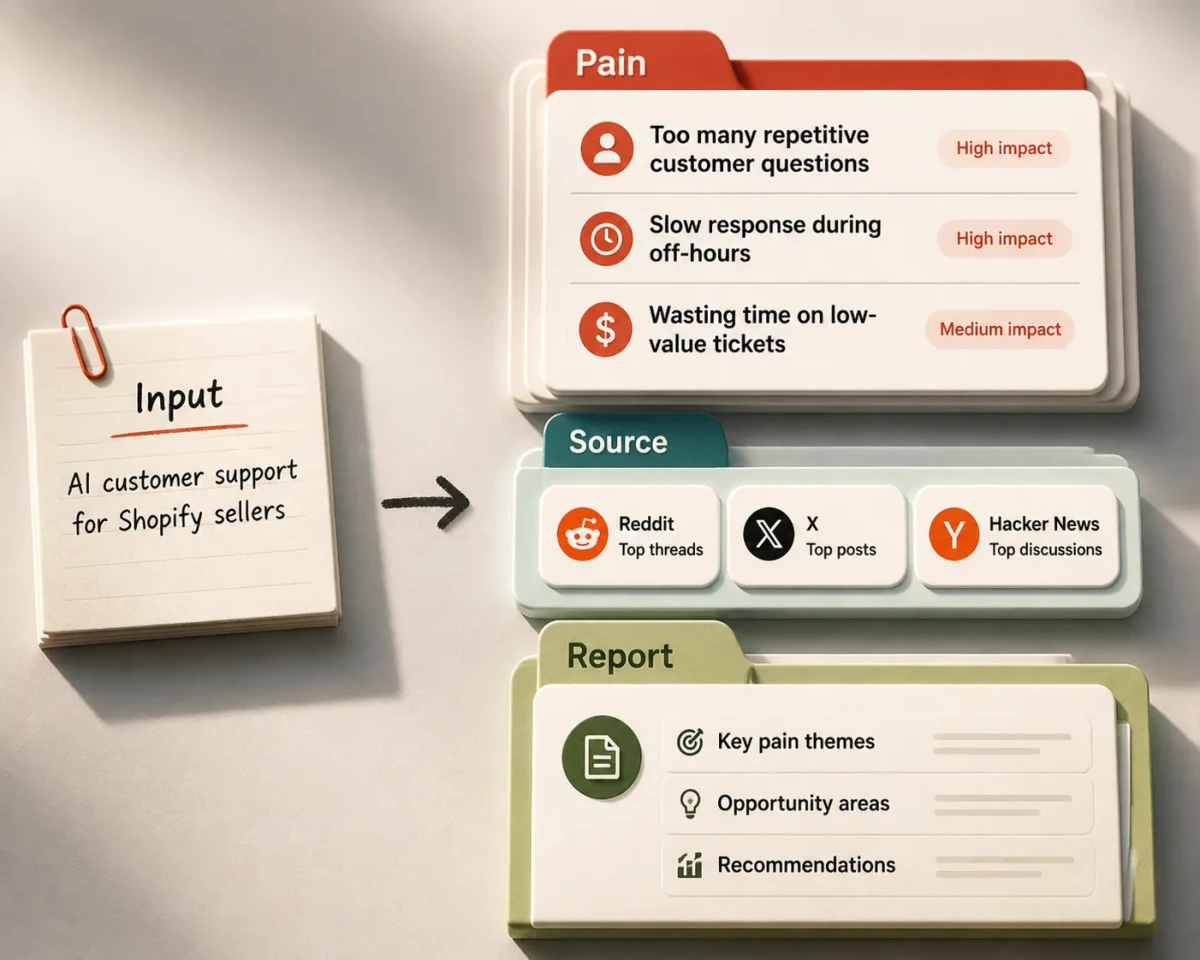
After submission, Tomako returns relevant communities, recurring complaints, user quotes, frequency, paid intent, feature wedges, and landing page angles.
What you get
Not “users need a better tool”: who complains, where, and why it matters
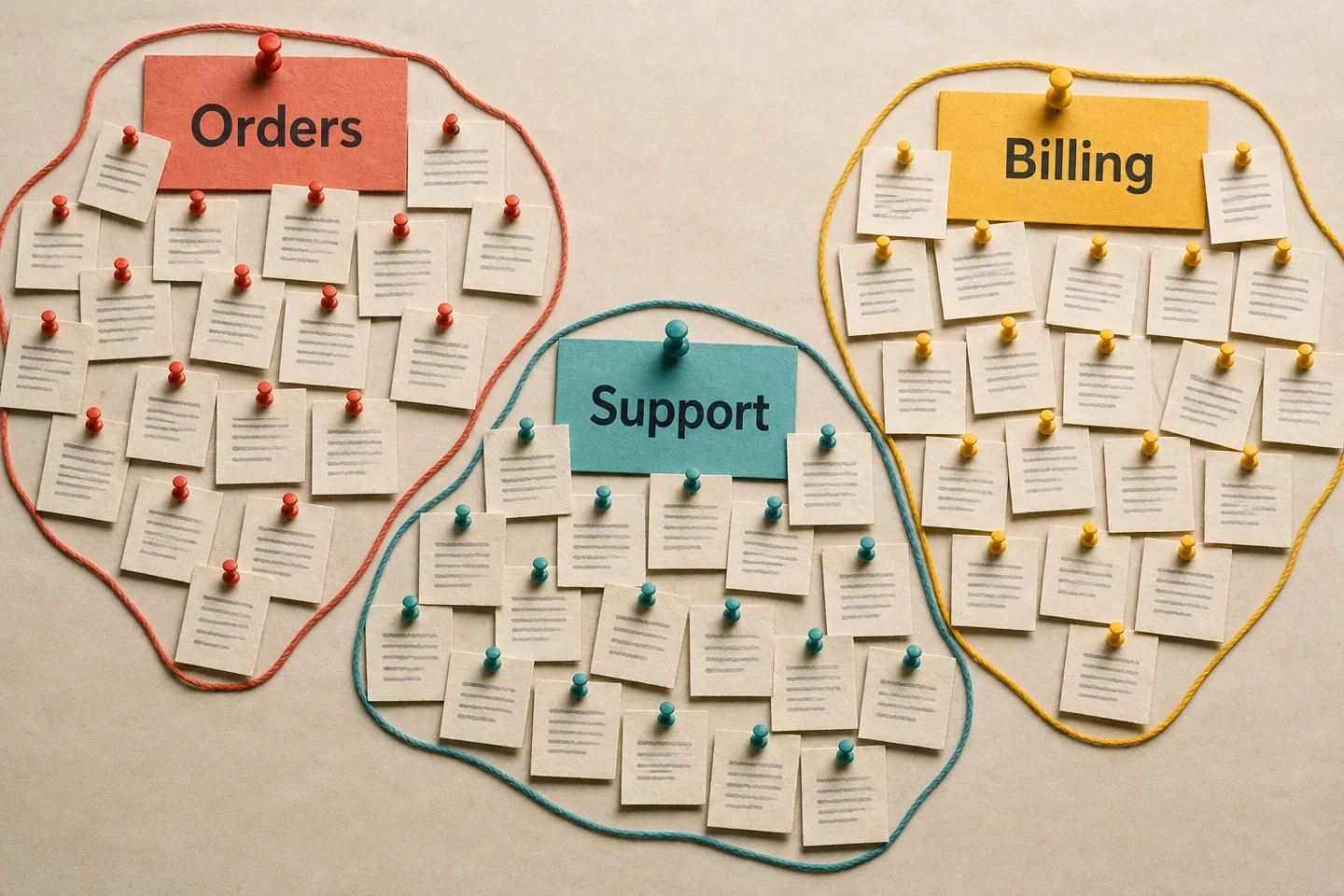
Recurring complaints: scattered posts clustered into pain themes, with short user-language snippets instead of second-hand summaries only.
Paid-intent judgment: time cost, current workarounds, budget clues, and repeated frequency are separated from vague interest.
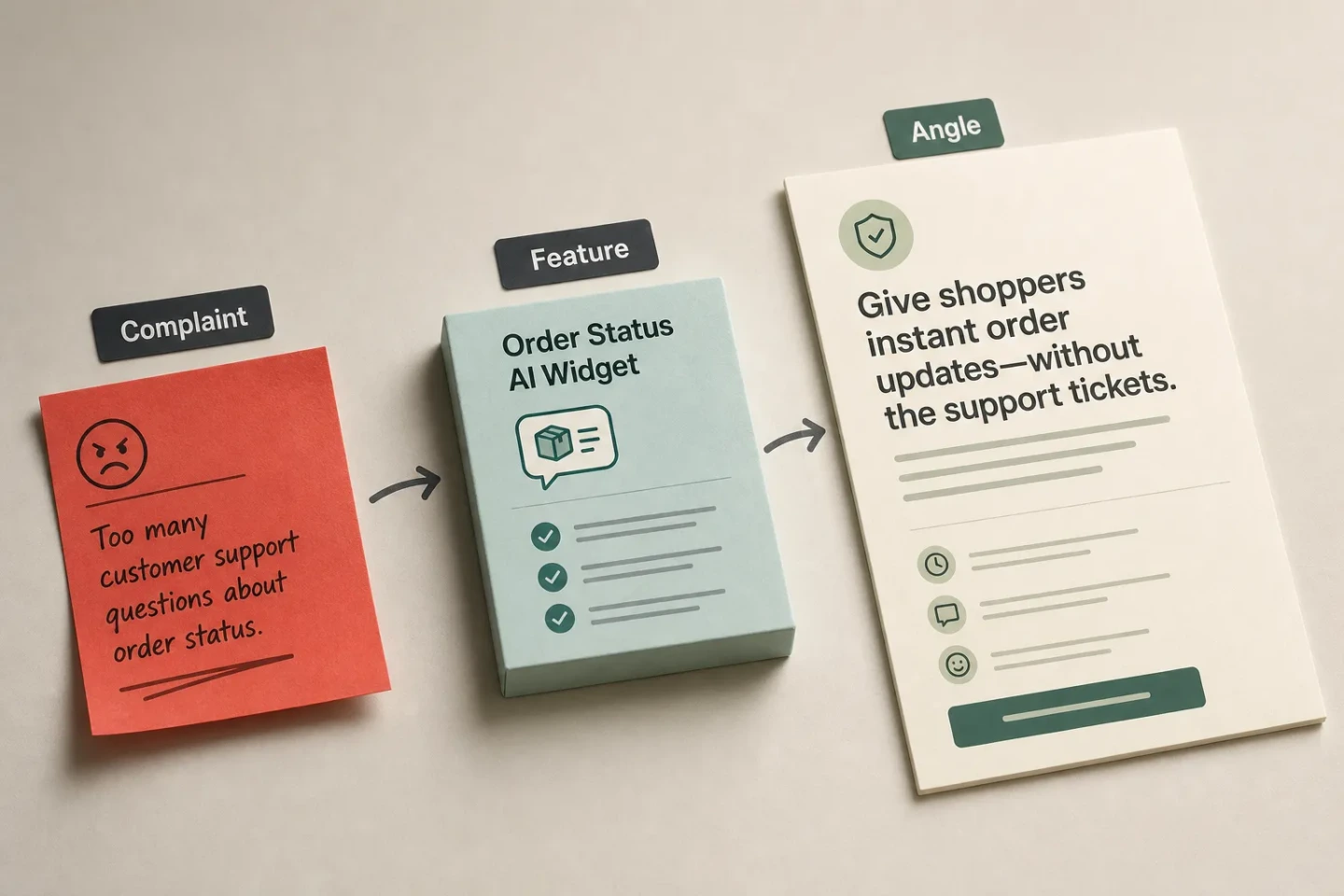
Feature and landing page wedges: complaints become narrow first features and concrete positioning angles for indie builders.
Good-tool standard
A useful pain point finder should help you avoid building the wrong thing
User language first: keep the complaint scene, phrasing, and community context visible.
Frequency versus noise: one viral post is not a market. The report must show signal strength and evidence gaps.
Payment motive: useful output explains what users lose, what they do now, and why they might pay.
Testable wedge: every opportunity should become a small feature, landing page headline, or interview question.

Result guidance
Use the report to validate the narrowest wedge before building the full product
Pick one complaint with strong frequency, medium-to-high paid intent, and a small enough first feature.
Turn user snippets into interview questions and confirm the pain with 5-10 target users.
If sources are thin or confidence is low, continue manual query research before building.
When multiple communities repeat the same complaint, test with a small tool, Chrome extension, AI widget, or service offer first.
FAQ
Boundaries before you use it
Does it access private communities or logged-in content?
No. The workflow should only analyze public, accessible discussions and search results. It does not access private, logged-in, deleted, or paywalled content.
Are user quotes exact direct quotes?
Not always. To avoid misquoting and copyright issues, the report may use short snippets or conservative paraphrases with source clues for review.
Is frequency an exact statistic?
No. Frequency is a weak/mixed/strong judgment from currently visible public signals, meant for research prioritization.
Why is this useful for SaaS, AI tools, plugins, and Chrome extensions?
These products often start from one repeated complaint: order status, export, notifications, sync, review, or workflow cleanup before expanding into a larger product.
When one pain point looks worth pursuing, turn the idea into a full validation report or interview guide.