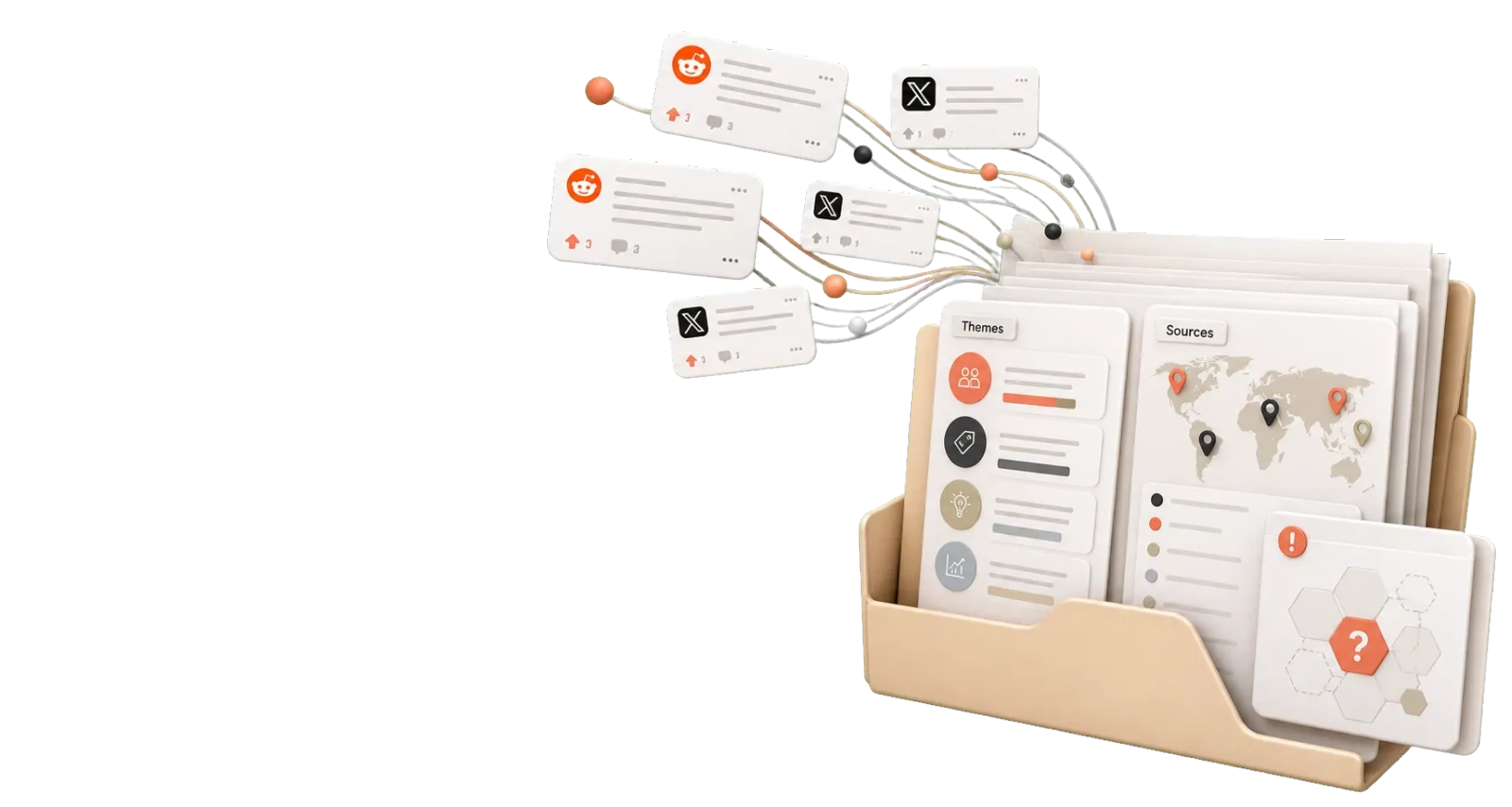
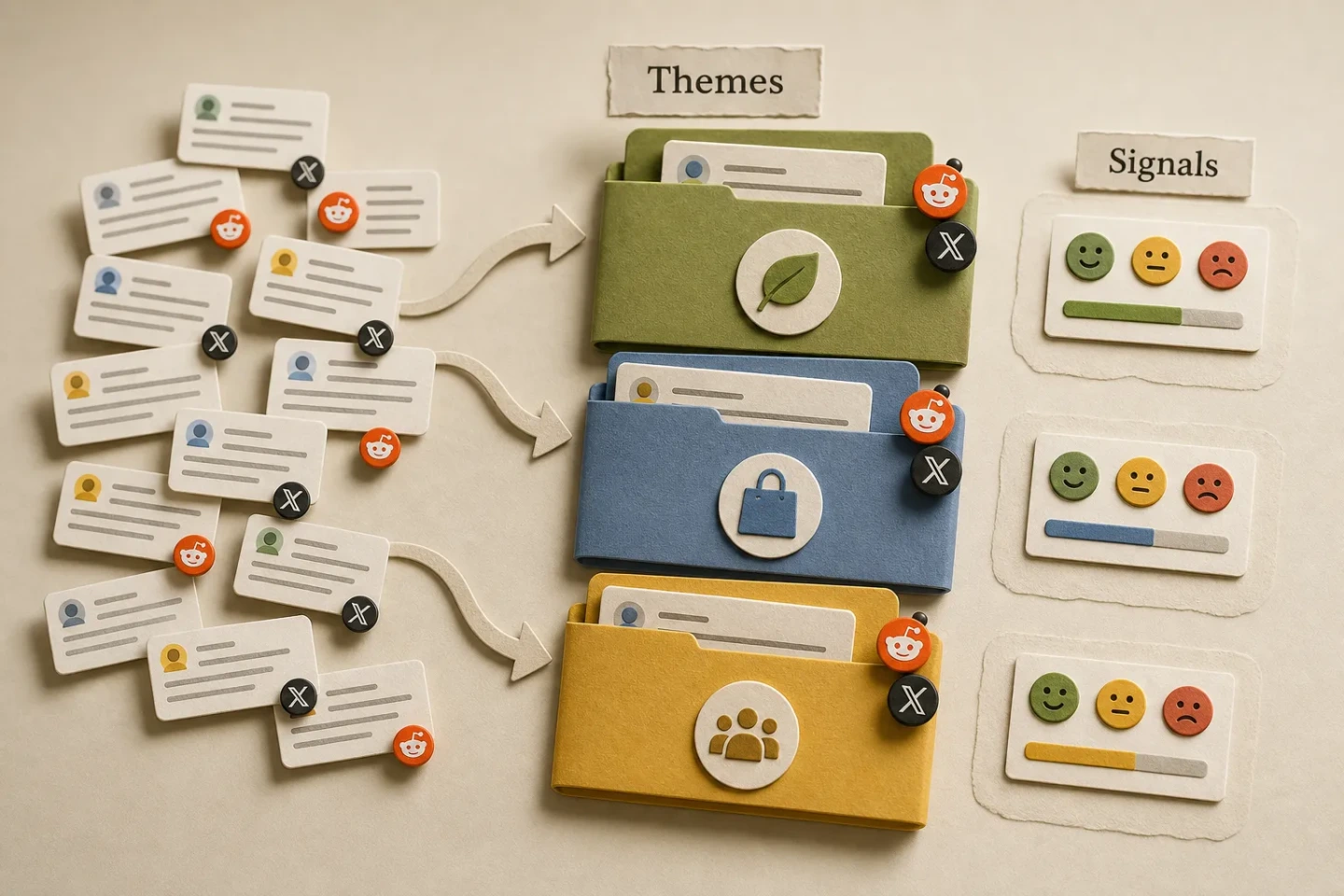
Theme clusters: repeated Reddit and X discussion patterns grouped into readable themes instead of a flat list of links.
Tool task
Reddit / X Social Listening Research Report
Turn a rough research question into a reviewable social listening report. Built for founders, PMs, growth teams, and researchers who need to understand what public communities are saying, resisting, and asking for.
Tool workspace
Enter inputs, review the output, then use the page guidance for the next step.
Start here
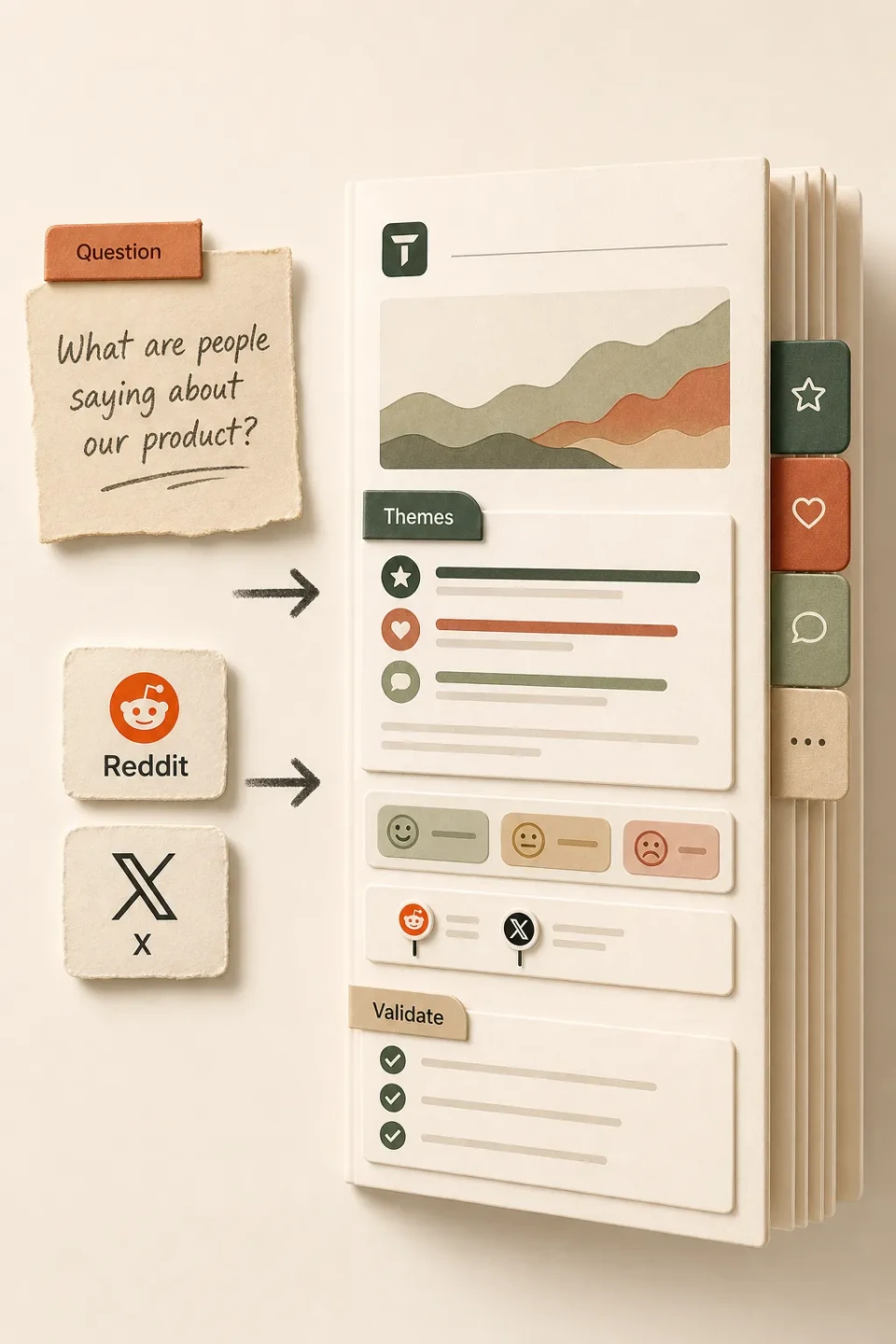
One question is enough. Tomako converts it into public search queries, keeps source gaps visible, and treats the result as research evidence rather than guaranteed truth.
Your social listening report will appear here
After submission, Tomako returns themes, sentiment, representative user language, opportunities, risks, source clues, evidence gaps, and next validation questions.
What you get
A report that keeps themes, sources, and uncertainty visible
User-language evidence: short source-labeled snippets or conservative paraphrases, so you can review the original context.
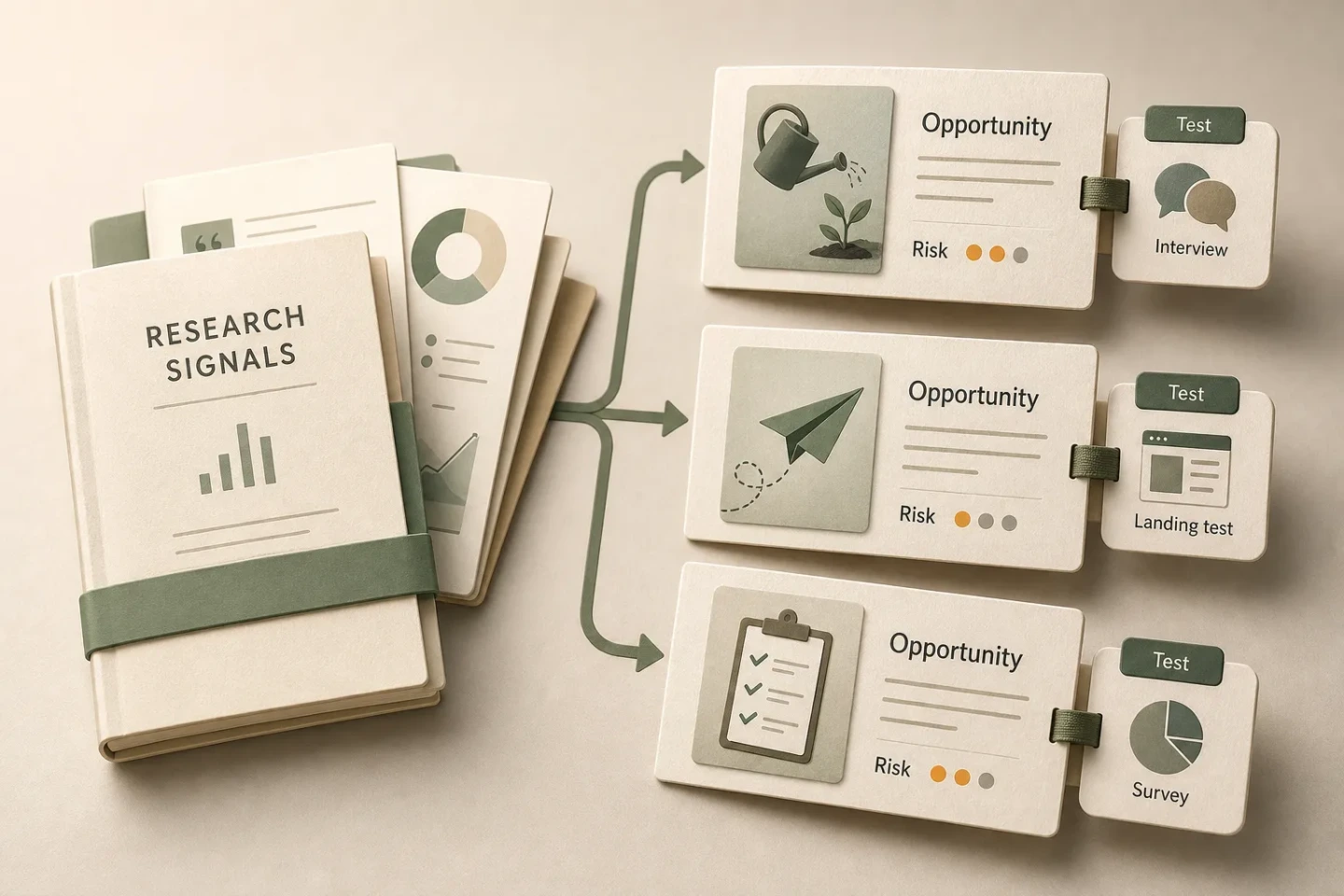
Opportunity and risk map: what users seem to want, what could go wrong, and which assumptions need validation next.
Evidence gaps: thin sources, platform access limits, weak signals, and missing segments stay visible instead of being hidden.
Good-report standard
A useful social listening report should not pretend weak evidence is certainty
Source transparency: the report should show where signals came from and which search queries were used.
Theme quality: repeated patterns should be separated from one-off comments, jokes, promotion, and praise-only noise.
Actionability: each conclusion should lead to a positioning angle, product question, research task, or validation step.
Boundaries: public-platform limits, private content, deleted posts, and incomplete coverage must be written plainly.
Result guidance
Use the report to decide what to investigate next, not to skip validation
Start with themes that have repeated sources, clear user language, and a plausible business or product implication.
Turn representative comments into interview questions, survey prompts, landing page hypotheses, or competitor checks.
If the report flags weak evidence, run narrower searches or ask users directly before changing product direction.
Share the summary, risks, and source list with your team so everyone can review the same evidence base.
Support and limits
Public signals only, with source gaps treated as part of the result
Supported: rough research questions, product directions, competitor concerns, audience objections, and platform discussion scans.
Not supported: private communities, logged-in timelines, deleted posts, paywalled data, exact market sizing, or guaranteed real-time coverage.
Failure recovery: if a result is thin, narrow the audience, name a product category, choose one platform, or add target geography.
Result use: copy the report into your research doc, review source URLs, and validate strong claims with interviews or landing page tests.

FAQ
Boundaries before you trust the report
Does it crawl private Reddit communities or logged-in X timelines?
No. It should only analyze public, accessible discussions and search-visible pages. Private, authenticated, deleted, restricted, or paywalled content is out of scope.
Are the quotes exact direct quotes?
Not always. The report may use very short direct snippets or conservative paraphrases with source labels to reduce misquoting and copyright risk.
Can I use the report as a final market research answer?
No. Treat it as a fast research brief. Strong themes still need source review, user interviews, survey checks, or product experiments.
What should I enter if my first report is too thin?
Add the target audience, market, competitor name, product category, or a narrower wording of the problem. Broad questions often produce broad evidence gaps.
When one community signal turns into a product idea, continue with a pain point finder or full community pain extractor.