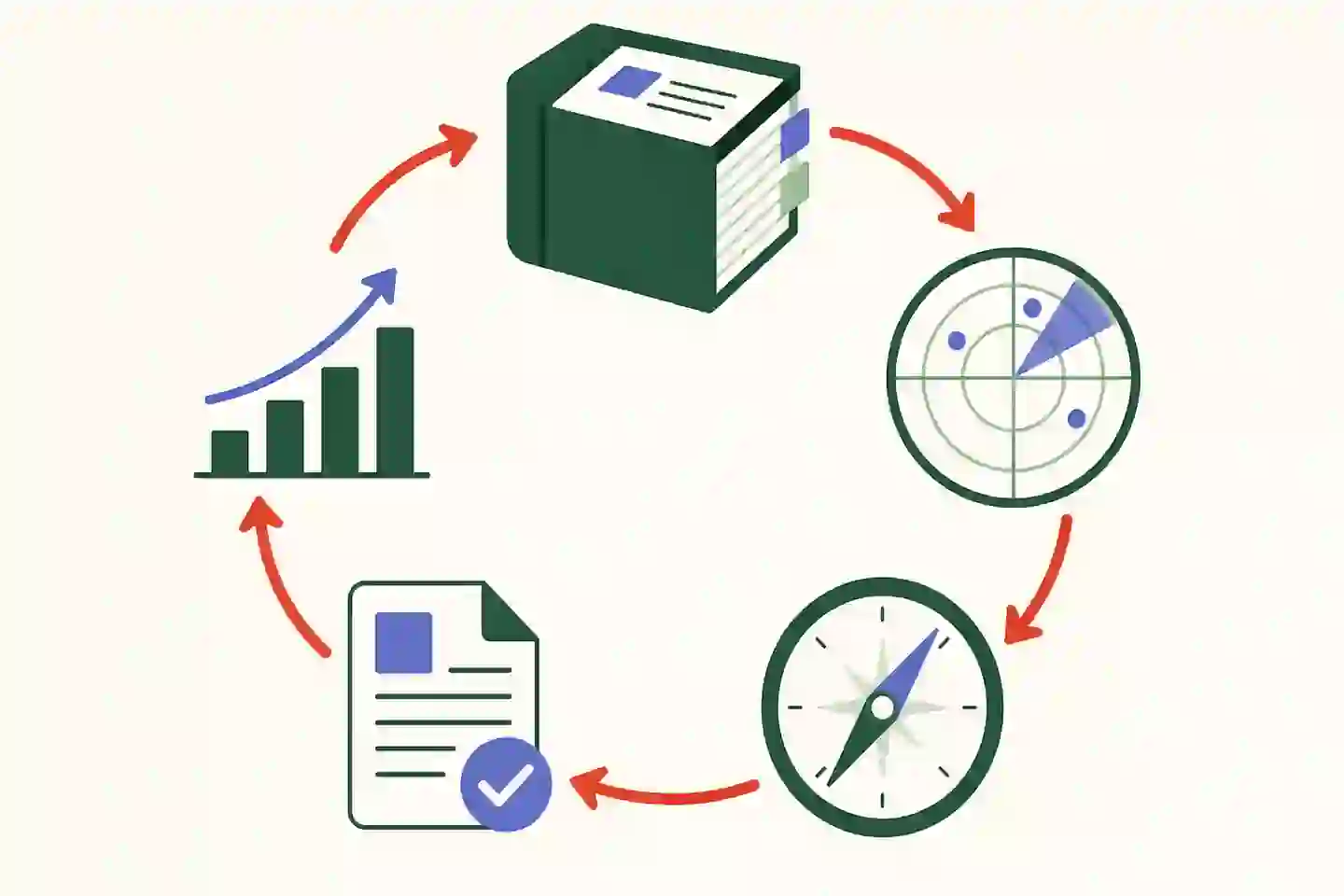
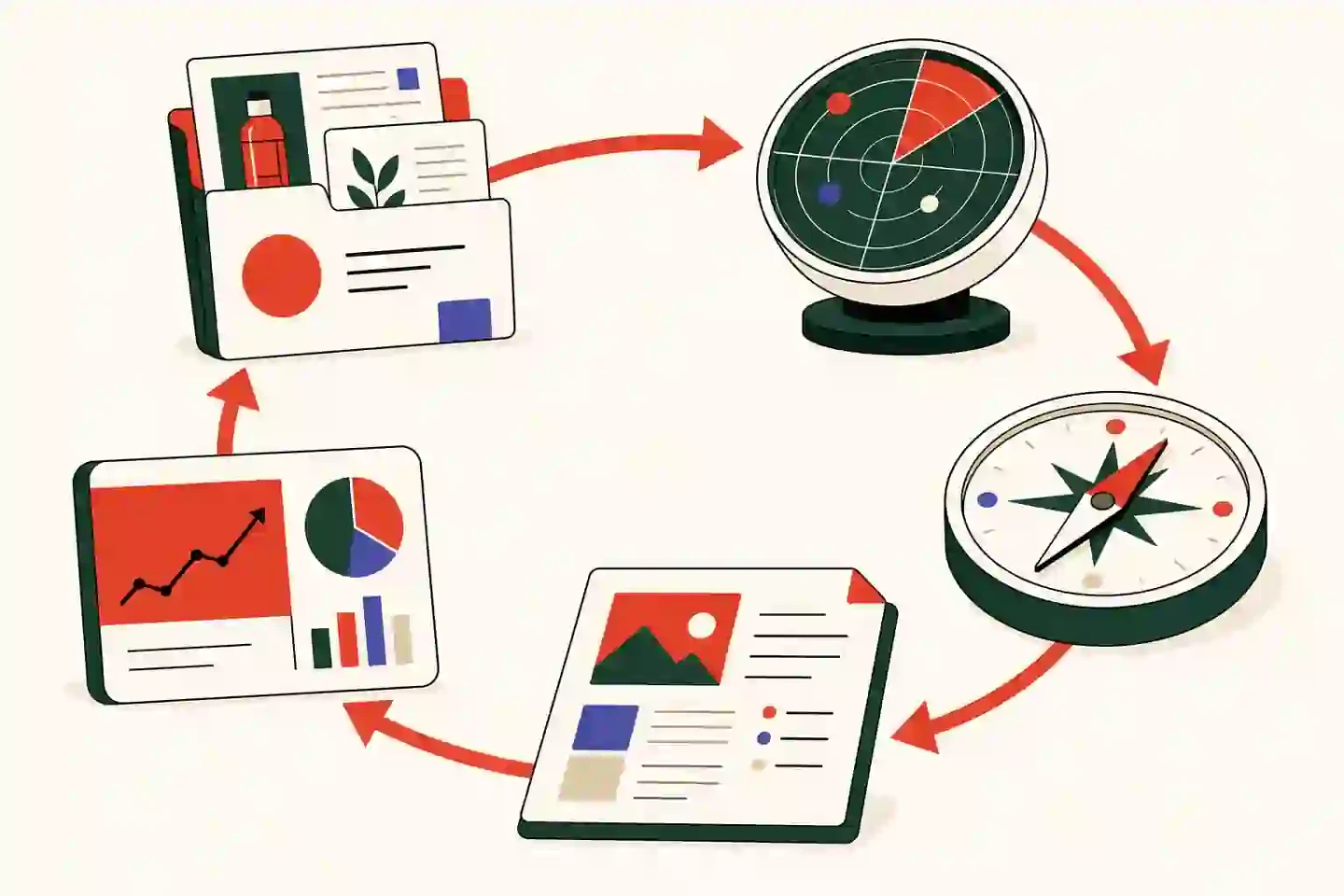
An AI CMO is software that helps a team run marketing as one connected loop. It keeps business context, finds useful signals, ranks the next move, prepares work for review, and learns from results.
An AI CMO is software that helps a team run marketing as one connected system.
It keeps the product, audience, goals, and limits in view. It finds useful market signals, helps choose the next move, prepares work for review, and carries results into the next cycle.
The name is still loose. There is no shared product standard for an AI CMO. The best test is not what a product calls itself. It is what the product can do in a real marketing loop.
An AI CMO is useful when each stage feeds the next one.
A simple definition of an AI CMO
An AI CMO should connect five jobs:
Context. Keep the product, audience, goals, approved claims, limits, and past choices in view.
Signals. Find changes in search, customer feedback, competitors, creators, communities, and campaign results.
Priorities. Compare possible actions against the goal, evidence, effort, risk, and timing.
Work. Turn an approved choice into a brief, draft, task plan, or other asset that a person can review.
Learning. Connect shipped work and real results to the next decision.
A tool that writes copy after a prompt may be a good assistant. It is not yet an AI CMO. The difference is the connected loop.
How an AI CMO differs from other AI marketing software
These systems can work together, but they solve different problems.
System
Main job
Typical input
Human role
AI marketing tool
Improve one task
A file, form, or task
Choose and use the output
AI marketing assistant
Help a person think or draft
A prompt or chat
Direct each step
Marketing automation
Repeat fixed steps
Rules and triggers
Design rules and handle exceptions
AI marketing agent
Complete one bounded workflow
A goal, tools, and limits
Set rules and review key actions
AI CMO
Coordinate choices across marketing
Business context, signals, goals, and capacity
Own direction, approvals, and results
An agent is an AI system that can choose steps and tools while it works. A workflow follows a path set in advance. Anthropic explains this difference in Building effective agents.
An AI CMO may use both. A fixed approval flow works well for publishing. An agent may suit an open research task. The wider system should choose the safer pattern for each job.
The five roles an AI CMO should perform
1. Keep context ready for a decision
Good marketing needs more than a tone prompt.
The system needs a current view of:
what the product can do now;
who it serves;
which claims the team has approved;
which goal matters most right now;
what the team can spend and ship;
which tests have already run;
what the team learned.
More data is not always better. The context must fit the task, stay within its allowed scope, and be easy to correct.
2. Turn signals into possible opportunities
A signal is a change. An opportunity is a good reason to act.
For example, several users may start asking the same question. That is a signal. It becomes an opportunity only when the question fits the product, the audience, the timing, and the team's ability to respond.
A useful system shows that link. It does not call every trend an opportunity.
3. Make tradeoffs visible
Most small teams have more ideas than time.
An AI CMO should compare options using clear fields:
fit with the current goal;
strength of evidence;
possible value;
effort and other needs;
time window;
risk and ability to undo the action.
The result should be a recommendation with reasons. A hidden score is not enough. A person should be able to change a limit and see why the order changes.
4. Move an approved choice toward completion
A suggestion creates value only when someone can act on it.
The system should turn an approved idea into the next useful object. That may be a content brief, page draft, creator shortlist, campaign plan, or task list.
The source, goal, owner, limits, and finish line should stay attached. The team should not have to explain the reason for the work again in every tool.
5. Close the learning loop
The system should record what the team approved, changed, shipped, and observed. It should also keep facts separate from judgment.
"The page received 40 qualified visits" is an observation. "This topic has strong long-term demand" is an interpretation. A useful AI CMO keeps both and lets people correct the second.
What an AI CMO should not decide alone
More freedom creates more need for clear limits.
Anthropic describes a useful permission model: an action can be allowed, require approval, or be blocked. Its trustworthy agents guidance also calls for meaningful human control. The NIST AI Risk Management Framework offers a wider way to think about AI risk and governance.
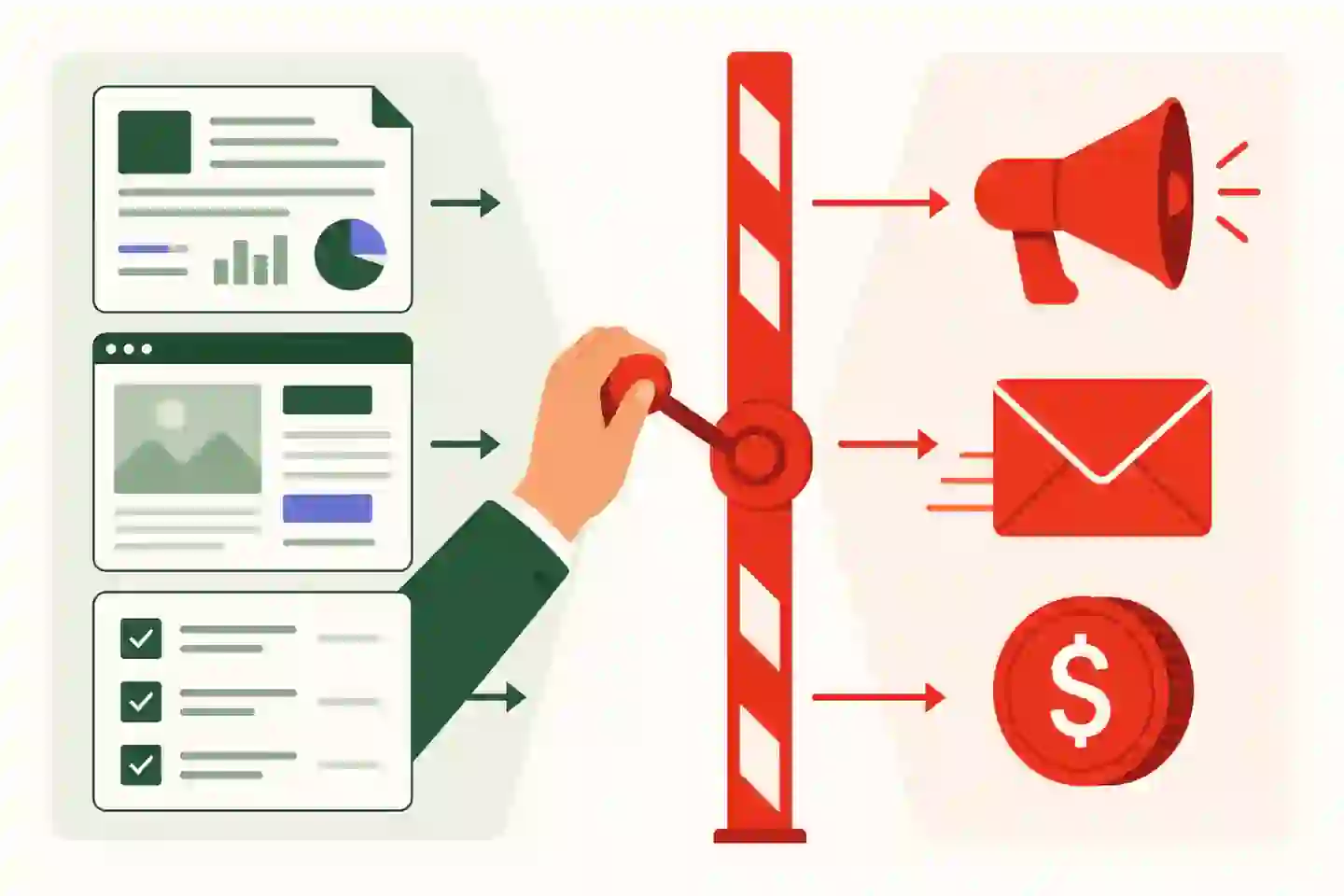
For marketing, four levels are easy to use:
Level
Examples
Good default
Observe
Read approved analytics, public pages, and research sources
May run inside an allowed scope
Prepare
Draft briefs, assets, shortlists, and internal advice
May prepare work for review
Act
Publish, send messages, change a live page, or spend money
Require clear approval or a strict limit
Block
Invent claims, use private data without permission, hide sponsorship, or bypass controls
Do not allow
AI can prepare and recommend. People approve actions that create public, legal, or financial impact.
People should keep control of:
positioning and brand tradeoffs;
legal, privacy, safety, and product claims;
public promises;
external messages sent in the company name;
budget and pricing choices;
final responsibility for business results.
The FTC's advertising and marketing guidance is a useful reminder. Claims made by software and app companies must still be truthful and not misleading.
How to evaluate an AI CMO product
Ask for real behavior, not a list of planned features.
Use these seven questions in a live test:
Can it restate your product, audience, goal, and limits without making up facts?
Can it show which sources support an opportunity?
Can it explain why one action beats another under your real capacity?
Can it turn the choice into work that is ready for review?
Can it show which actions are allowed, gated, or blocked?
Can it keep a clear record of sources and decisions?
Can a real result change the next recommendation?
This is a practical test, not an industry certification.
AI CMO software and a human CMO have different jobs
A human CMO can lead through unclear strategy, manage people, defend a budget, handle conflict, and accept business responsibility. Software cannot do those things on a company's behalf.
An AI CMO can help the human owner keep more context in view. It can compare more signals and move approved work through a repeatable loop.
If no one owns the strategy, the missing piece is leadership. If someone owns the direction but the work keeps losing context and momentum, an AI CMO may help.
Tomako is an AI CMO for the AI era
Tomako is an AI CMO for software teams. It gives marketing one operating system, so every task can stay tied to the same product and business goals.
The idea starts with a simple belief: marketing should not restart from a blank prompt in every tool. Product facts, target users, goals, budget limits, market signals, approved work, and past results should stay connected.
Tomako turns that shared context into a continuous operating loop:
It keeps the product story, audience, goals, limits, and decisions in one source of truth.
It gathers useful signals from approved sources and links them to the business.
It compares opportunities against evidence, impact, effort, risk, and timing.
It turns a chosen direction into work that a person can review, such as a brief, plan, draft, or checklist.
It brings the result back into the system, so the next decision starts with what the team has learned.
This loop connects positioning, research, content, search, creator work, launches, and marketing operations. These are not separate generators. They are parts of one system that shares context and moves the same strategy forward.
Tomako also keeps a clear human boundary. It can prepare, organize, and advance the work. People still own public claims, publishing, outreach, spending, production changes, and other high-impact decisions.
That is Tomako's definition of an AI CMO: a marketing operating system that moves from product truth to opportunity, action, and learning without starting over each time.
Is an AI CMO the same as an AI marketing assistant?
No. An assistant helps with a request. An AI CMO should keep context, compare opportunities, coordinate approved work, and use results in later decisions.
Can an AI CMO replace a human CMO?
It should not be treated as a full replacement. People must own strategy, public commitments, budget choices, high-impact approvals, and final responsibility.
Does an AI CMO need access to all company data?
No. It should use the least access needed for the job. Sources and permissions should be visible, limited, and easy to remove.
Can an AI CMO publish or send messages by itself?
It may be able to, but that does not mean it should. External actions should require approval or a clear and narrow limit.
What is the best first use case?
Choose one repeated decision loop. Give it real context, one goal, a review owner, and a clear finish line. Do not start with "run all marketing."
The bottom line
An AI CMO is useful when it connects context, signals, priorities, work, and learning.
The loop matters more than the label. Human control matters as much as AI capability.
Tomako is an always-on AI CMO for software growth. It builds a working understanding of a product, brand, business goals, budget, and market, then turns opportunities across content, creators, search, customer feedback, and competitive intelligence into growth work a team can review and move forward. Tomako supports the work without taking over the decisions: direction, brand judgment, spending, publishing, outreach, and accountability remain with the people behind the product.
 Tomako AI