The world is one big ad space—even selling the space can become an ad
In September 2026, Marc Lou, an indie developer behind startup tools such as ShipFast, divided his body into ad spaces. He invited brands to bid for them. He planned to race in a HYROX event in Turkey on September 19, wearing sponsors’ temporary tattoos. HYROX combines running with fitness challenges.
Before the race began, he had already announced $112,000 in sponsorships.
A chest, an arm, or a backside starts to look like ad space once someone draws a border and names a price. Around the same time, a developer sold sticker spots on a laptop he had yet to buy. A creator sold logo spots on a dress she planned to wear to a conference. A website let brands pay to top a leaderboard.
The story went beyond a new surface for a logo. Prices, rival buyers, and the final result became part of the appeal. Selling ad space became an advertisement in its own right.
A laptop found sponsors before its owner bought it
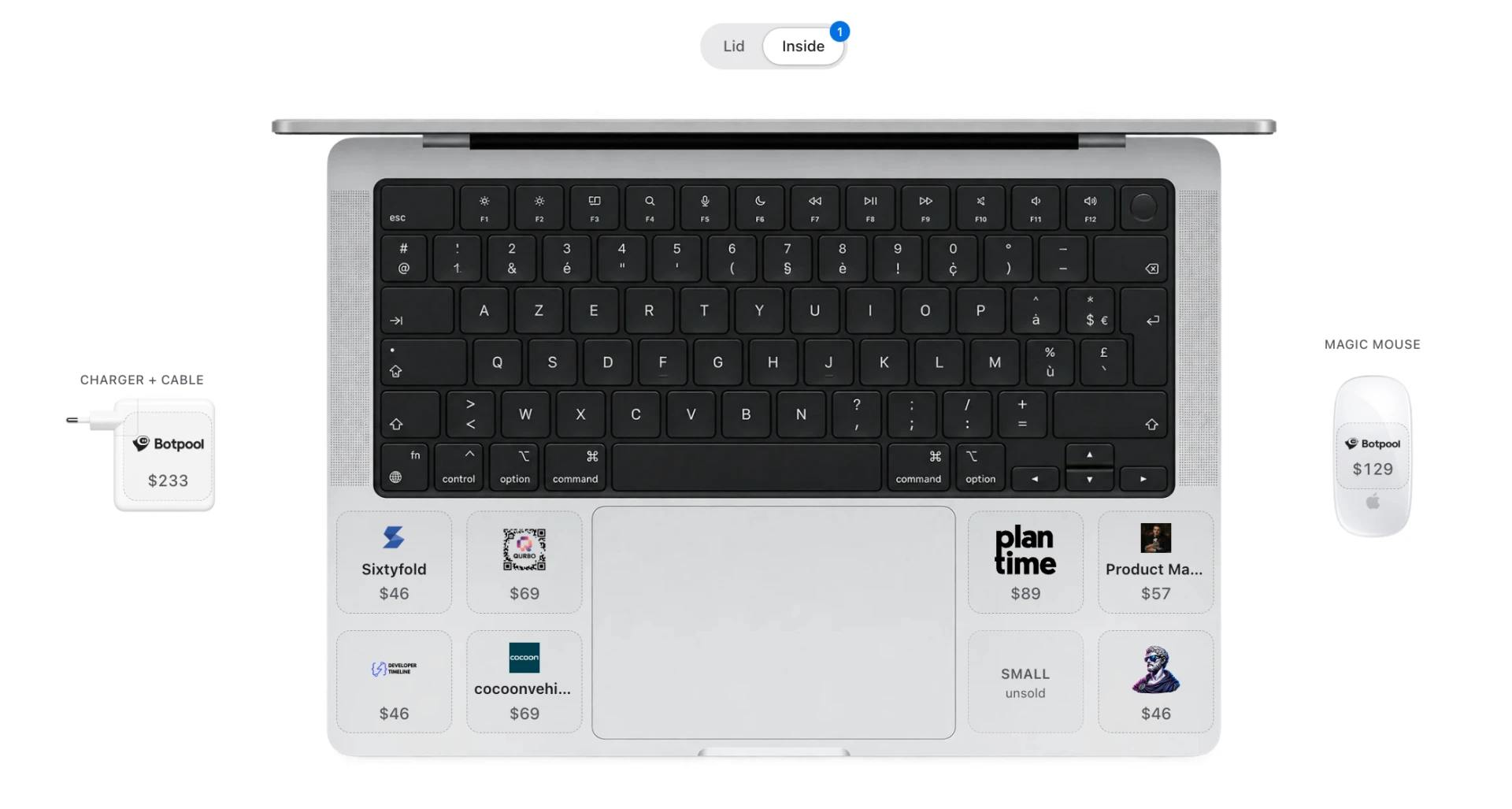
Vincent, an indie developer in Bordeaux, France, wanted a new MacBook. His old computer limited mobile work and iOS development. He turned that need into Brand My Mac: ten sticker spots on his future laptop lid, open for brand bids. Fundraising began on August 26, 2026.
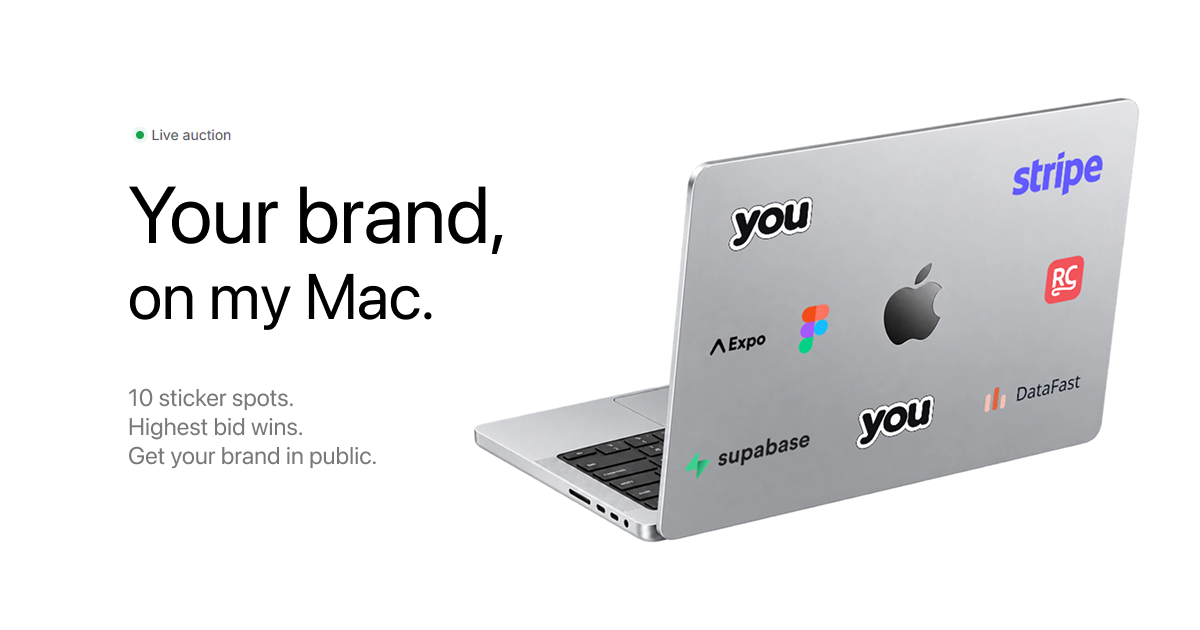
The proposal was easy to retell. Someone needed a computer and would work each day with sponsors’ logos on it. Buyers got a clear offer: a physical sticker, a website link, and appearances in his work and daily-life photos and videos.
The sponsorship terms required a deposit with a bid. Losing bidders got it back; winners paid the balance. Views and clicks were not guaranteed.
A laptop made the use of funds more concrete than “support my creative work.” Stickers kept sponsors in the story after the purchase. Their brands could appear with the computer in later photos. Sponsors could buy both exposure and a role in a small project people could easily understand and share.
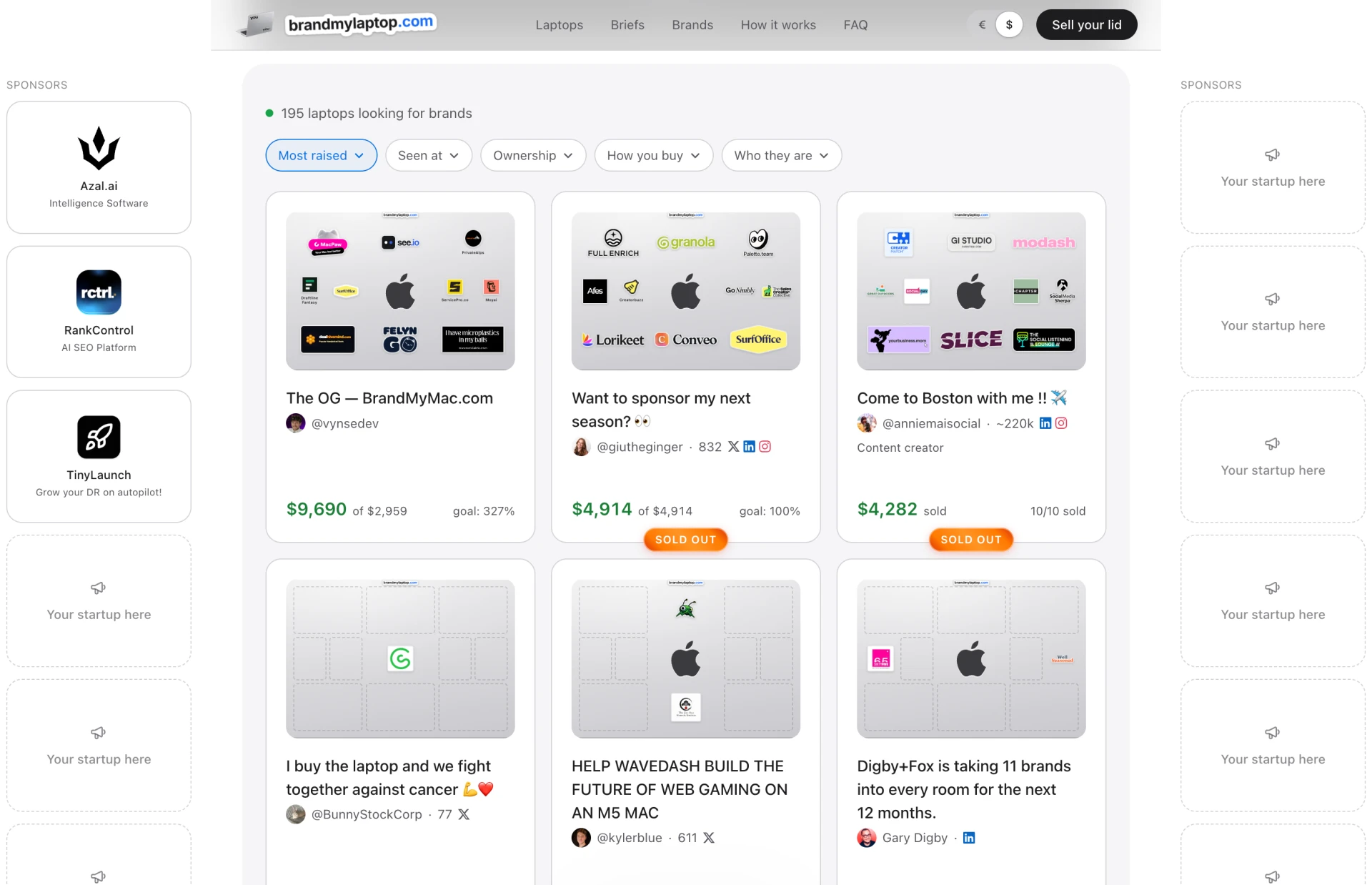
As of September 15, the site showed €8,282 in active leading bids: 327% of the €2,529 laptop goal. This was the sum of valid bids for the spaces, with final balances settled separately. The offer grew from the lid to the palm rest and accessories, reaching 20 spots.
In week two, Vincent added the palm rest, charger, and mouse. Lower starting prices gave brands another way to join if the lid was too expensive. Fundraising for a computer grew into selling space on the things around it.
The fundraiser received tech media coverage. People then asked whether they could do the same with their own computers. Vincent built BrandMyLaptop.com, where others could price and sell spots.
The format could now be copied. Whether other laptops found buyers still depended on who owned them and why people would follow their work.
Public prices turned buying ads into a contest
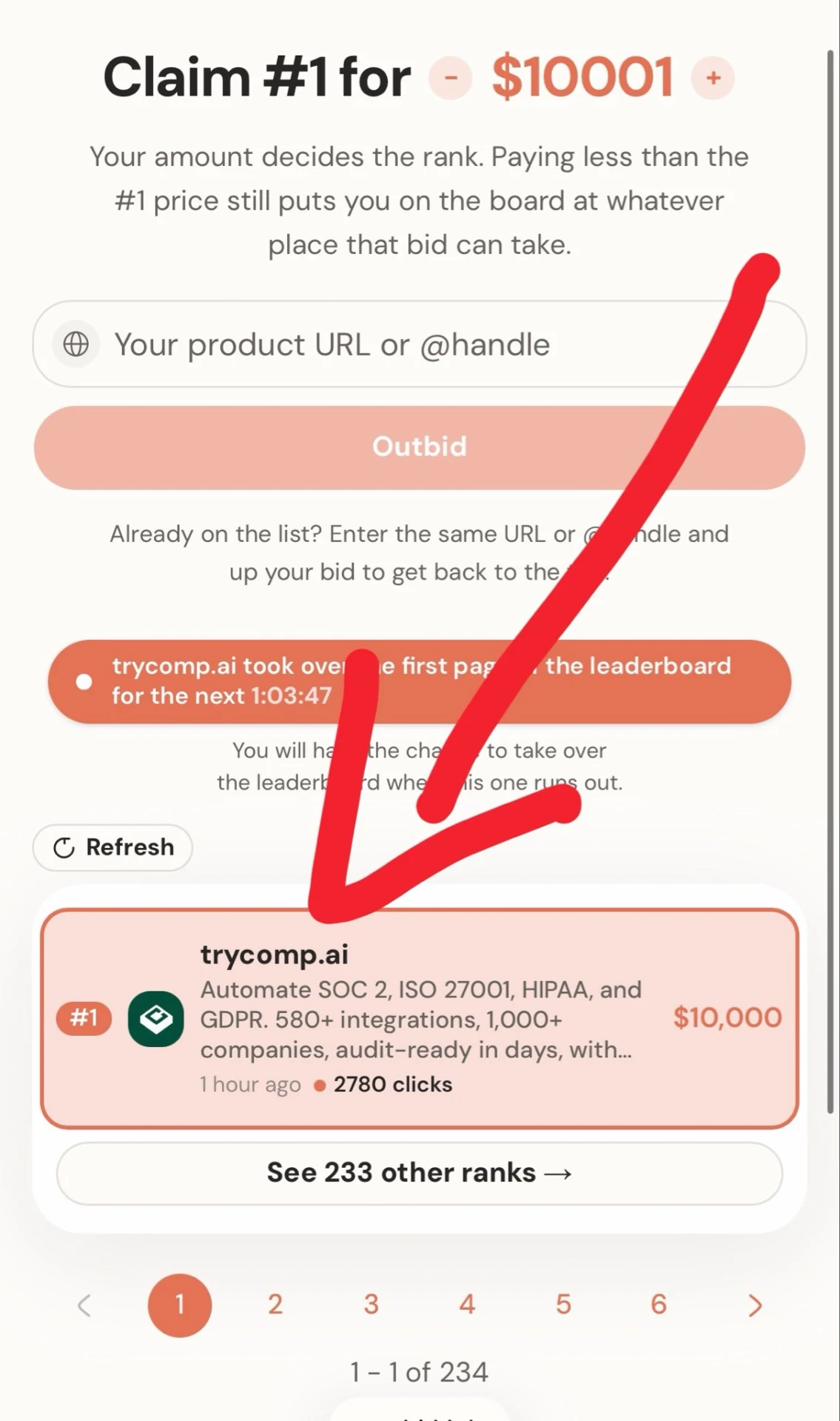
Could the idea work without even a laptop, leaving only the question of who would pay more? Outbid made that into a website. Brands and individuals pay to join a board that links to their product or X account. The amount paid sets their rank.
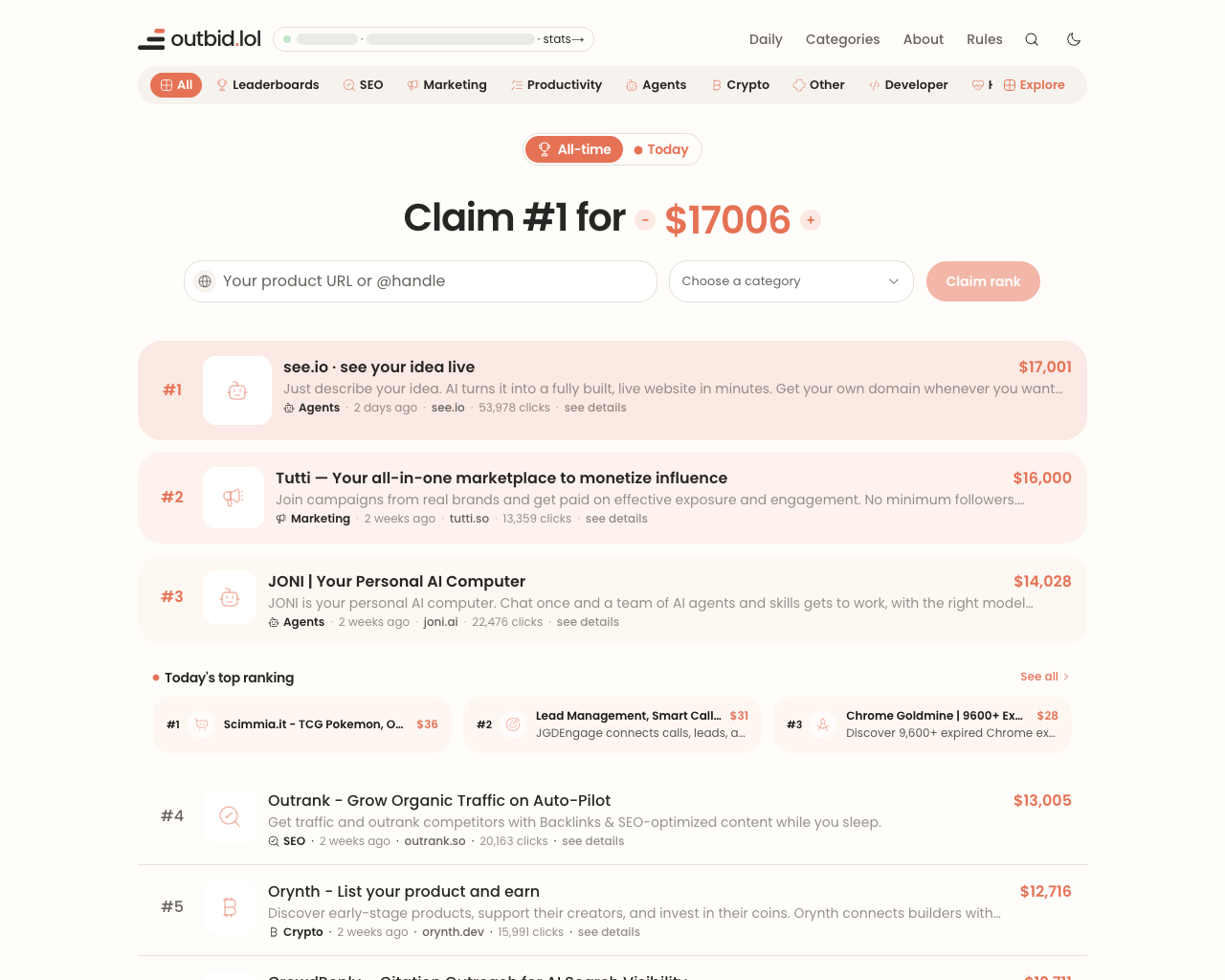
German founder Jonathan Wilke launched it on August 19. The all-time board ranks total payments, with no expiry. When someone else pays more, you move down. Earlier payments win ties. To raise an existing entry, you pay only the difference.
The rules say that being overtaken does not earn a refund. Separate daily boards reset apart from the all-time board.
The no-refund rule shapes the contest. Brands buy a listing and a rank that can change. How long first place lasts depends on later buyers. Someone who falls behind has a reason to pay more. Onlookers can keep watching to see who will do so.
As of September 15, see.io led the all-time board at a listed total of $17,001. Prices set the order of ads and became a topic of discussion. The page showed what brands would pay to be seen, as well as what they wanted to say.
In a community post after launch, Wilke reported 1.1 million visitors and $132,000 in revenue in the first 48 hours. The sale had drawn attention. But commenters asked whether people came to find products or watch a spending contest, and how long the novelty would last.
That is a central question for advertisers. Someone watching prices may click through to a product or leave after enjoying the contest. Outbid’s rise and the period after its early buzz make the question more concrete.
Public bids create updates worth sharing. A brand that buys a place must still ask why those viewers would need its product.
A body and a dress gave the story a date and a place
Marc Lou’s body sponsorship auction added a planned ending: logos would appear on him at the race. He first offered ten muscle ad spaces. The closed auction ended with 15 sponsorship spots totaling $112,000.
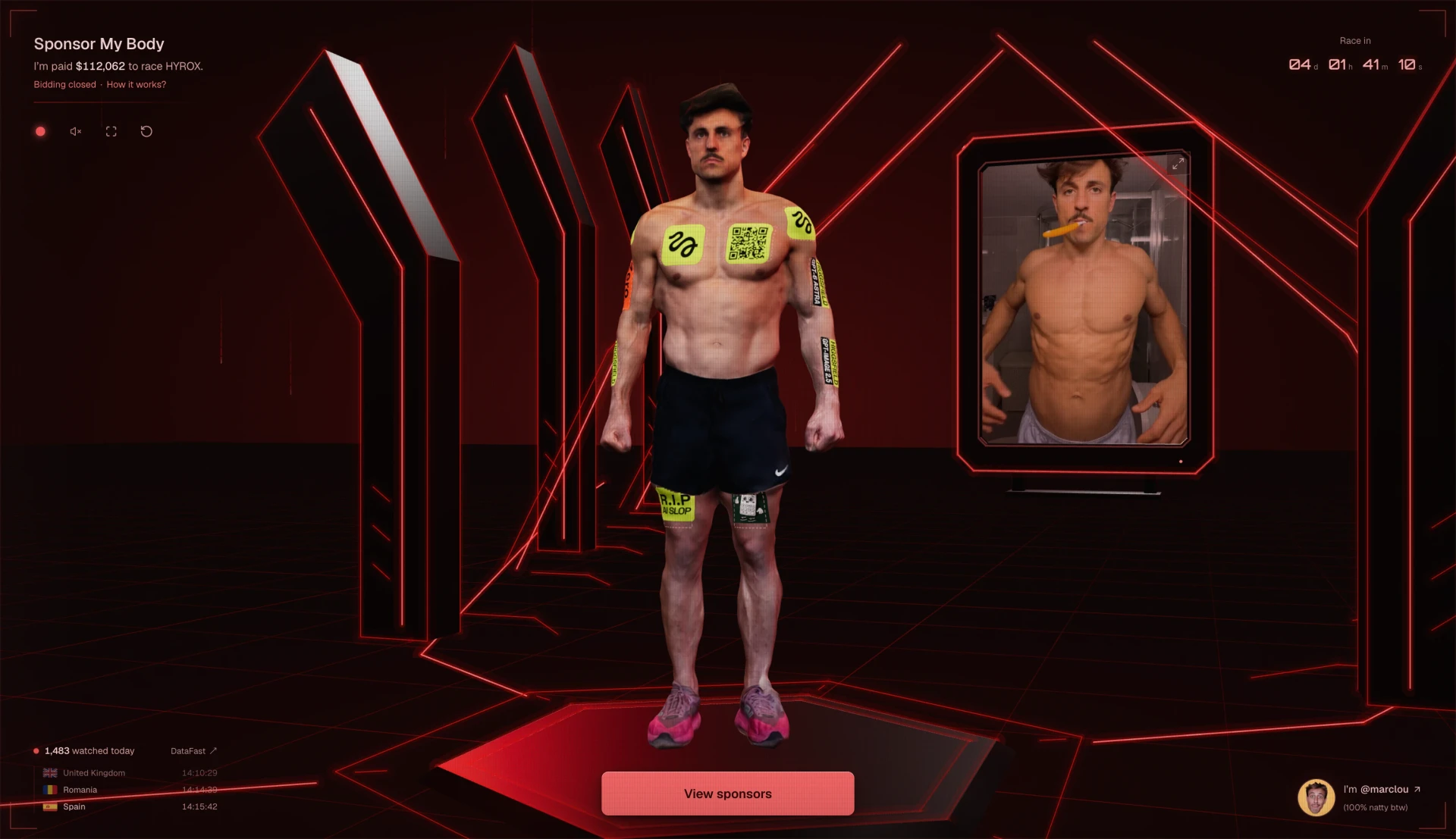
It gave people a different reason to watch than a normal event billboard. Body locations drew curiosity, and bidding could change the final look. Buyers became part of the question of which brands he would wear at the race. Website links and posts on YouTube and X could also take the sponsorship beyond the venue.
Marc was not starting from zero with a patch of skin. He had spent years building an audience. In comments after the auction, he pointed to years of training, skills, and audience growth.
Making a body ad may be simple. Building a group that keeps watching your work takes time. Ignoring that history makes the idea look easier to repeat than it is.
Video creator Vanshu chose a different setting. She planned to wear a sponsored dress to TOKEN2049 in Singapore on October 7. The conference serves crypto founders, investors, builders, and others in the industry.
Her sponsorship page split the dress into 13 spots: six on the front and seven on the back. Starting prices ranged from $350 to $1,200, with a $9,200 fundraising goal.
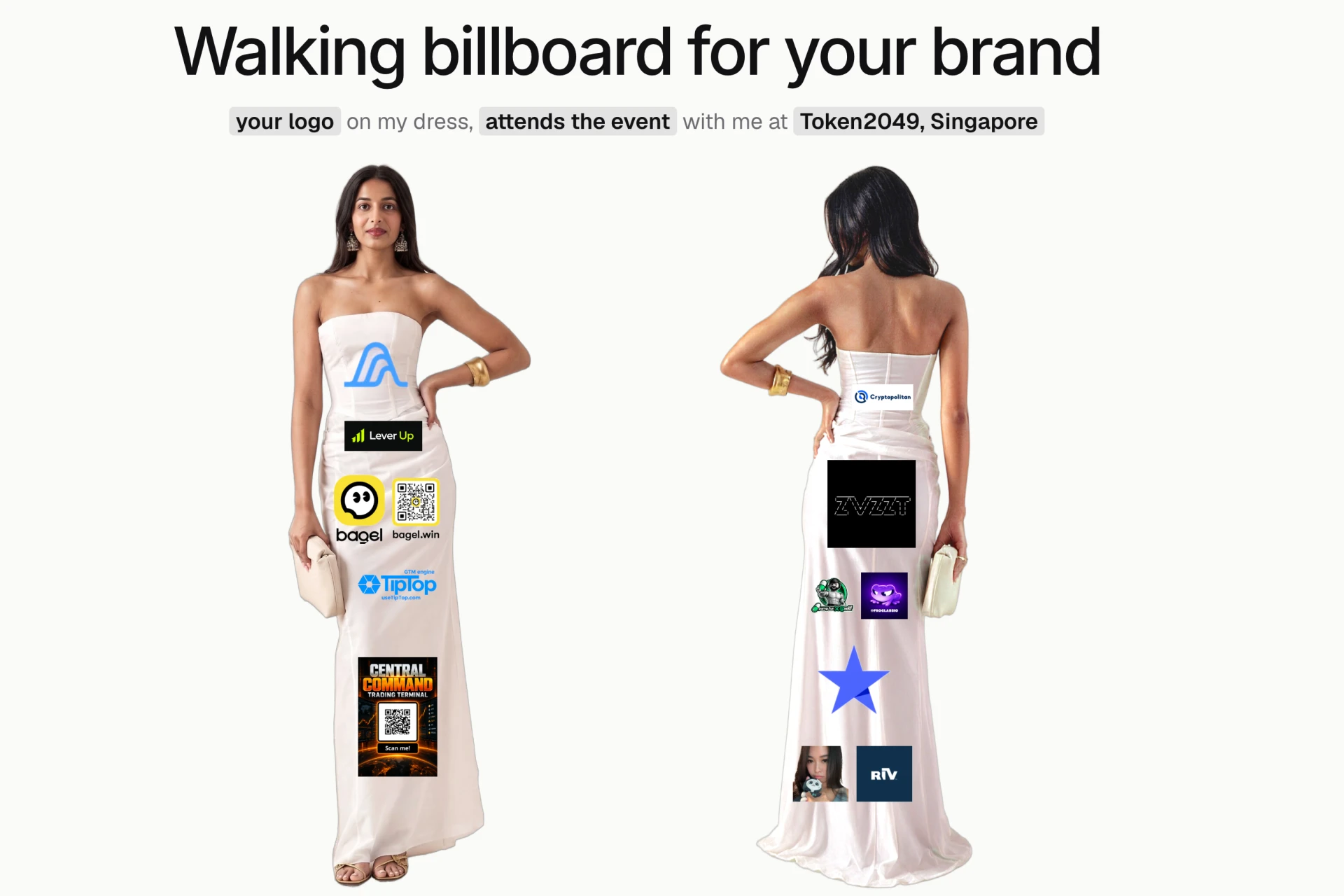
Here, buyers could more clearly picture where the dress would go and who might see it. Sponsorship also included short and long videos and a thank-you post with images. Higher tiers added dedicated content and cover placements. The price bought a set of display and content commitments, not just a patch of fabric.
A new buyer could also take over a sold spot for twice the price. The original buyer would get a refund minus payment fees. Unlike Outbid’s no-refund rule, this allowed a sold-out offer to keep changing.
| When a later buyer offers more | What happens to the earlier buyer? |
|---|---|
| Outbid’s all-time board | Moves down with no refund; can pay more to regain the rank |
| Brand My Mac auction | Losing bids get deposits back; winners pay the balance |
| Dress sponsorship | A spot can be taken for twice the price; the earlier payment is returned minus processing fees |
All three sell ad space, but buyers face different risks. Rank contests can repeat. Sticker auctions wait for winners. Sold dress spots can still change hands. Viewers see changing prices. Buyers need to know what their payment secures.
At the article’s September 15 writing date, Marc’s race and Vanshu’s conference trip were still ahead. People could already see who paid for which spots. The race and conference would give the stories another chapter.
The seller’s revenue does not tell buyers whether they made money
The biggest numbers usually belong to sellers: funds for the laptop, body sponsorships, or leaderboard payments. For brands, those same numbers are ad costs. Both sides may benefit, but one payment total cannot measure both returns.
A collection of buyer reports included Tibo, founder of SEO content tool Outrank. He said he spent $12,000 on Outbid and got 113 trials in three days, 53 above the usual level. That gets closer to a business outcome than a view count.
It still leaves questions. How many trials would pay? For how long? How many truly came from this ad?
The 113 total trials and 53 above the usual level measure different things. The total includes trials that would normally happen. The extra 53 come from a before-and-after comparison, which other changes at the time may also affect.
Dividing spend by all trials and calling it customer acquisition cost creates a precise-looking answer before the number of paying customers is known.
Even a brand-awareness goal needs to say who should remember what. People may remember a sponsored chest without understanding the sponsor’s product. Buying a place in an interesting event can make sense. Claiming all the event’s attention for one brand can greatly overstate the gain.
If the aim is to introduce a name to suitable people, such an event may appeal. If the aim is a steady flow of new customers, track visits through trials and payment. The seller’s sponsorship total cannot replace that chain.
More surfaces are easy to find; more reasons to watch are harder
There is a famous earlier example of selling small pieces of empty space. In 2005, Alex Tew made the Million Dollar Homepage to fund his education, selling pixels for $1 each. Only the final 1,000 pixels went to auction.
Reporting at the time recorded gross revenue above $1 million. The sale itself made an empty web page something people wanted to see.
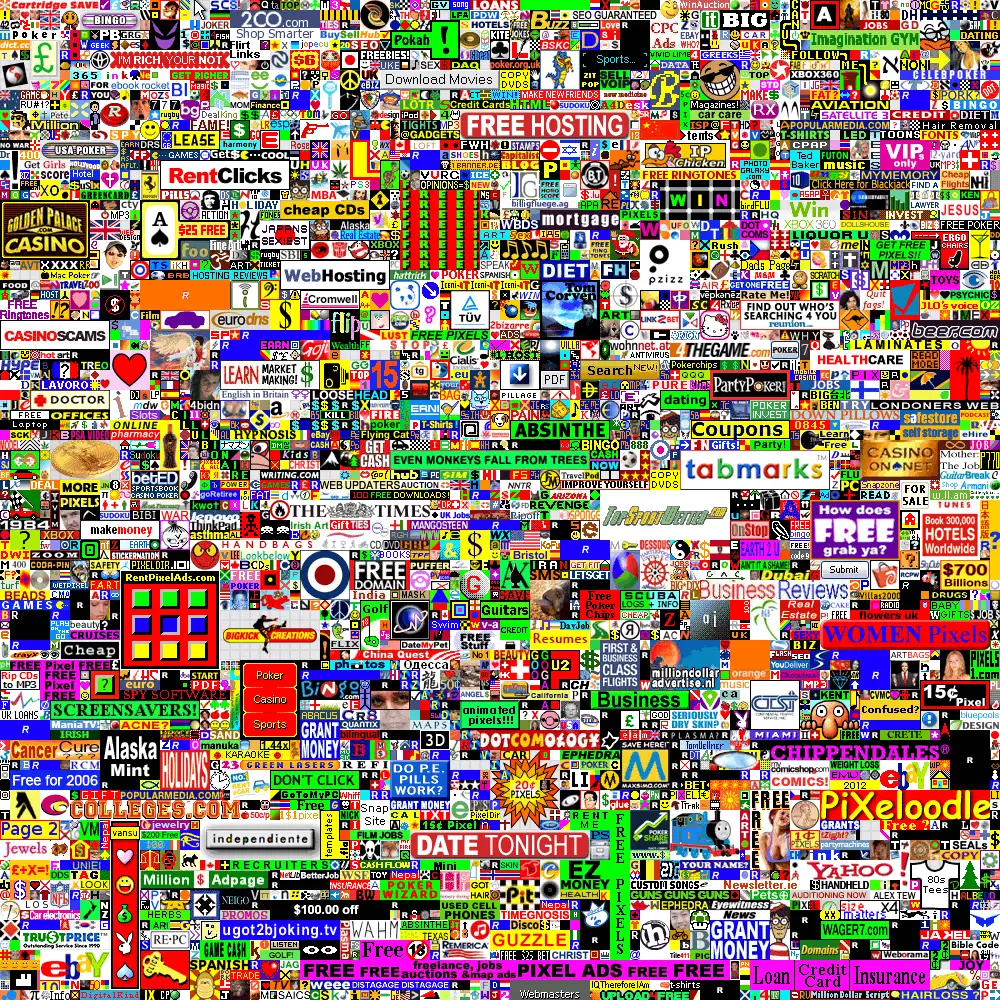
More than twenty years later, the material can be a laptop, a fitness race, a conference dress, or a list of payments. Each adds a reason to buy: support a specific plan, appear before relevant people, or join a contest already attracting discussion.
These cases broaden what an ad can be. Someone can turn work, a race, or a trip into a public deal others want to support and watch. A laptop lid, a leaderboard, a body, and a dress all end up with prices attached. A visible surface can become a place to sell.
But there are far more places to name a price than ad spaces worth buying. What remains scarce is attention from the right people and a reason for them to act. These new surfaces give buyers another place to make that judgment.