From a niche tool to 100 million users: what can we learn from Notion’s growth?
Notion is a digital workspace for people and teams. It brings notes, docs, wikis, databases, and project tools together. It also offers AI tools to help people write and find information.
Users build their own systems with pages, tables, boards, and calendars. These can hold reading notes, a team wiki, project plans, or a content schedule. You can start with a blank page or adapt a template. Teammates can edit, comment, and work in the same space.
In August 2024, Notion passed 100 million users. Ivan Zhao, its co-founder and CEO, looked back on the journey in a post that year. The company began in 2013 and rebuilt the product several times. It started to gain ground after Notion 2.0 launched in 2018.
Notion had an unusual way to spread: work that users had already done. A course plan, project board, or writing schedule showed how its author worked. It also showed others what Notion could do. Tutorials, groups, consulting services, and businesses grew around these results.
The company did not need to explain every use itself. But it could not simply wait for users to spread the word.
As more uses emerged, Notion added ways to copy pages and find people’s advice. It also made it easier to bring a personal tool into a team. Users took the lead in some areas; the company built support around what they were doing.
How one page became both a demo and a place to start
Ben Lang was an early user who later led Notion’s community work. Before joining the company, he had built a user website and a Facebook group. In an official interview, he recalled sharing screenshots of his pages.
People often asked how to use them. At first, they had to rebuild the pages themselves. A copy button later let them bring a page straight into their own workspace.
A screenshot shows a result. A copied page gives someone work they can build on. That saves some of the choices a new user would otherwise face: how to group information, choose fields, and link pages. A ready-made structure means they do not have to decide all of this on day one.
A template turns “I could use it that way” into a ready-made place to start. The author’s way of doing a task travels with the page. People learn Notion through examples of real work, as well as through its help docs.
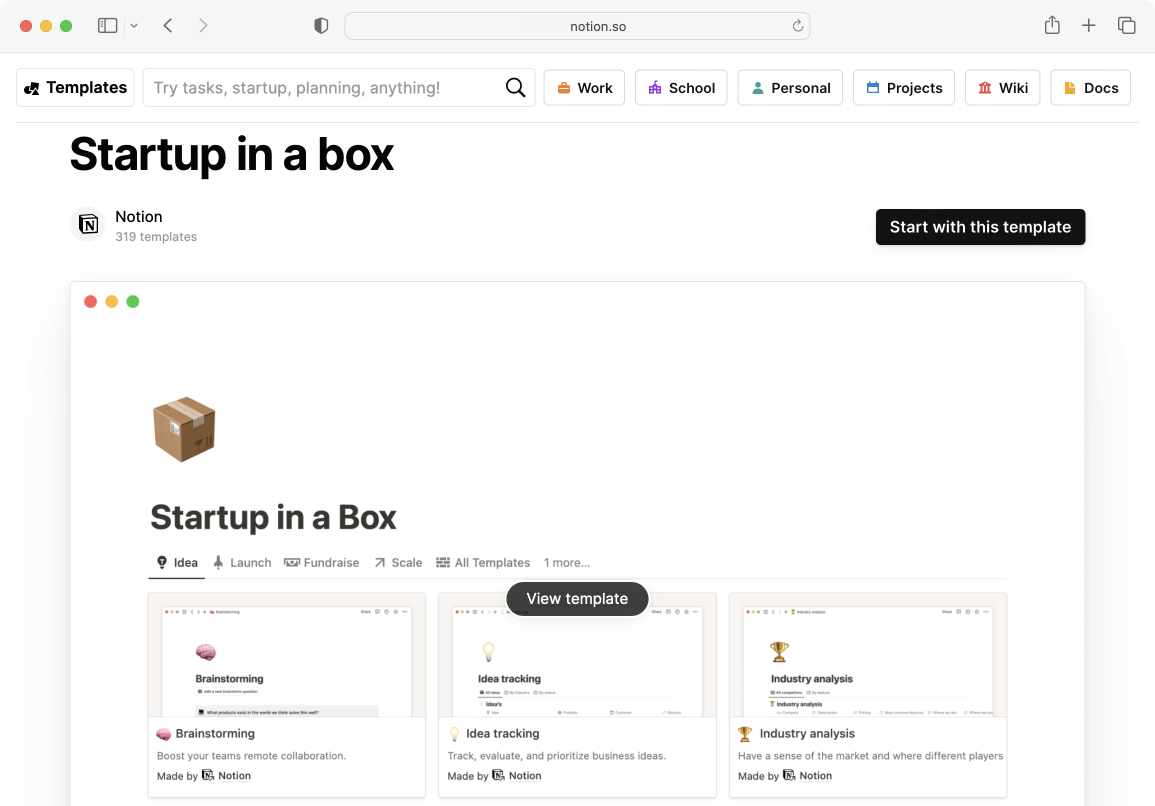
Yet copying a structure does not teach you all of its author’s habits. In a discussion about buying templates, one person paid $3 for a scholarship and college application tracker. They felt that building it would take more time.
Another user found it hard to use someone else’s pages. They forgot features, could not find things, and stopped using the template.
The first buyer saved work before getting started. The second had to learn someone else’s system. A growing template library can create both experiences. Templates cut setup time, but users still need to adapt them. A complex layout may help someone who knows the task well. It may give a newcomer more to learn.
As the community grew, Notion shared the work of teaching
Getting a template can raise new questions. Why is it built this way? How do I adapt it for another project? What if a feature does not work? People who know the task can often fill gaps in general help docs.
Notion’s ambassador program supports users who host events and make tutorials. They run their own groups. The company gives them event resources and ways to share product feedback. Local hosts and different kinds of users can keep their own voices.
If Notion made all this content itself, its team would need to learn each group’s work. Students, designers, and creators use the same tool in different ways. When users show their own work, they bring that knowledge with them. Company support also makes it easier for them to keep going beyond their own spare time and effort.
This work later grew to include helping companies adopt Notion. Some skilled users already offered those services. Notion brought consultants into a directory and added certification. Their job went beyond hosting a talk or making a tutorial. They helped teams start using the product in their daily work.
Ambassadors and consultants did different jobs, so they needed different support. Community hosts needed room to speak in their own way. Customers hiring a consultant also needed a way to judge their skills. Notion did not treat all these people as one group of promoters. As the community grew, the roles within it became clearer.
Liking a tool on your own is different from using it as a team
You can choose where to keep your own notes. You cannot decide how a whole team will work on your own. Once colleagues join, there are more questions. Who updates the docs? Who can see them? How do you move the old files?
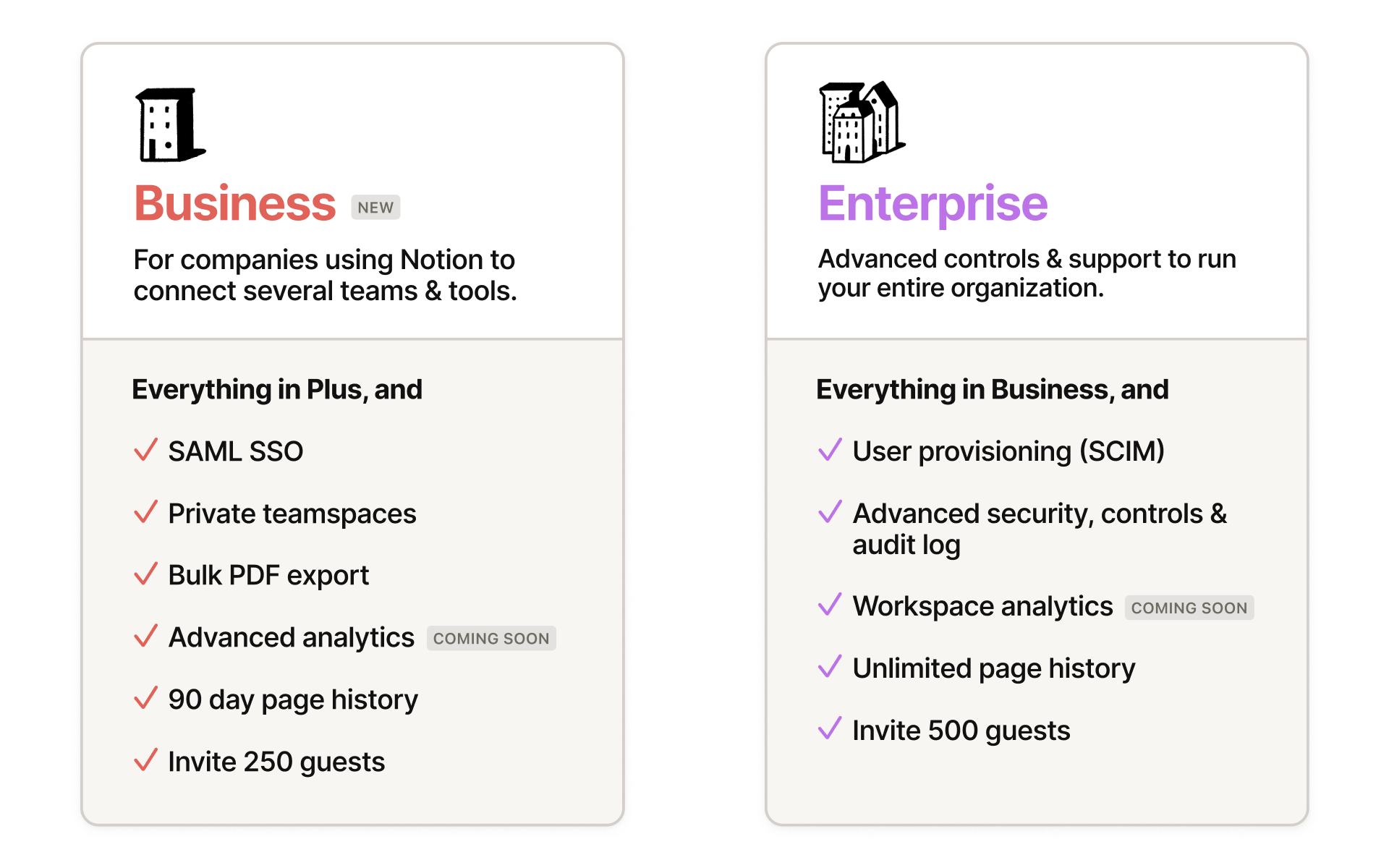
In 2020, Notion removed the block limit on its personal plan. People had more room to keep building their work. Its Business plan in 2022 added tools such as single sign-on and private teamspaces. One change removed limits on personal use. The other helped companies manage shared work and access.
Rachel Hepworth was Notion’s CMO when interviewed and had previously led growth. She named some early actions the team watched: inviting a second person, editing a doc, and creating a second doc on signup day. These actions were more closely linked to later payment.
That goes further than watching a demo or opening an account. Docs begin to hold real work, and other people join in. The product becomes part of how a team works. One person’s enthusiasm can lead to a recommendation. Shared value still needs a second person to take part.
Notion’s free entry point supported personal work. Its company features supported team use. The paths can connect, but more personal users do not automatically mean more teams adopt the product.
A creator partnership reached beyond the expected audience
Notion also worked with creators to reach people who were not yet users. The product appeared within someone else’s content. Those readers first cared about the subjects that creator usually covered.
Lexie Barnhorn led Notion’s social media and creator marketing when interviewed. In a review of its partnerships, she described a campaign with Career Supplements, a career advice newsletter. It included a GIF showing how to use Notion AI. Among roughly 150 partnerships she ran for that audience, it had the best conversion results.
A demo in a career newsletter does more than place an ad somewhere new. It puts the product into a setting readers already care about. The result suggests that audience fit is not just about whether a creator covers software or tech.
The review did not share full costs or long-term returns. It cannot tell us which channel is best in general. But it shows a useful possibility: an unexpected setting may make a product’s use clear.
From finding a template to finding an author you trust
As the number of templates grew, finding the right one became harder. Work was spread across personal sites and different stores. A user might see a workspace but not know where to get it. An author might make useful work but struggle to reach the right people over time.
Notion rebuilt its template gallery in 2023 with search, categories, and creator profiles. Authors gained a place to show their work together. Users could search by need or explore more work by the same person.
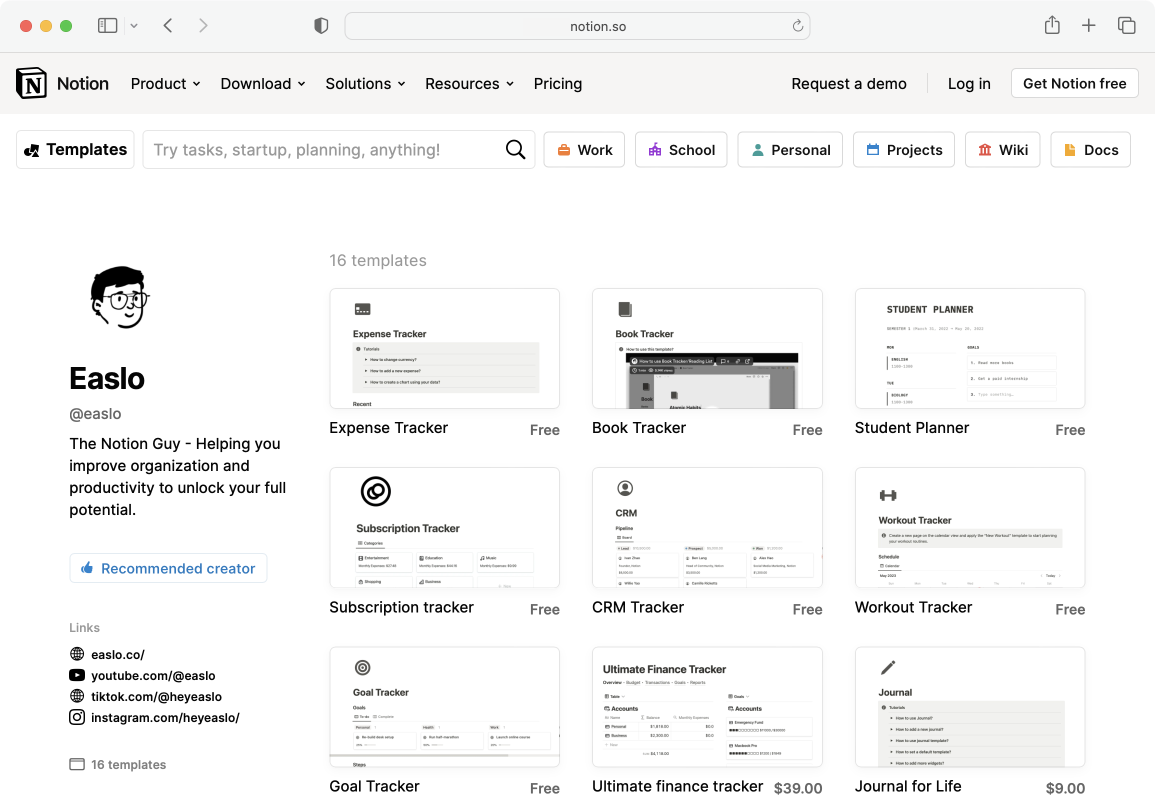
This turned finding one template into a chance to get to know its author. One template solves a current problem. An author who keeps making useful work may become someone users turn to for a similar task later. Their work can build a reputation, rather than remain a single listing.
With the Marketplace launch in 2024, Notion added payments, analytics, reviews, and tools to protect creators’ work. Templates were now products that people needed to sell, compare, and deliver, as well as things to share.
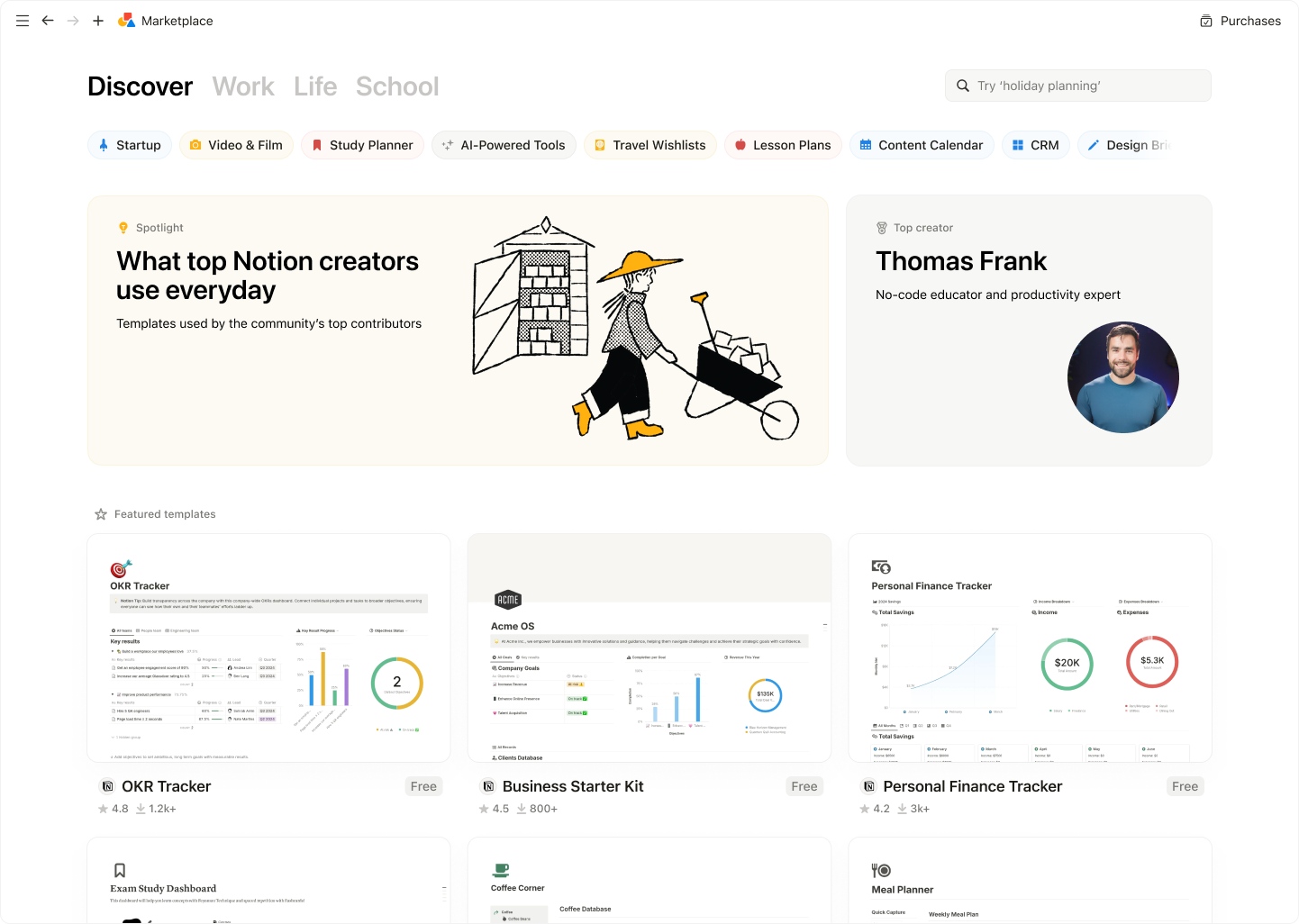
Use categories, creator profiles, and reviews answer different questions. What fits my needs? Who made it? What do other buyers think? Sellers need ways to be found and to protect and manage their work. Buyers need to judge whether a template will help them after purchase.
When users sell their knowledge, the platform needs to support more than sharing. Copying first solved how to take a page with you. Search and sales tools addressed which one to choose, whom to buy from, and what happens if something goes wrong. The company’s work changed as users exchanged more value with each other.
AI use also started with work people had already done
Notion’s 2023 AI launch review described a gap between plans and actual use. The team imagined people writing new posts or emails from a blank page. In tests, people more often selected existing text and asked for help. Improve writing was the feature they returned to most. That feedback led the team to redesign the interaction.
People did not always bring a brand-new task to AI. Often, they had already written something and wanted to improve it. Existing work gave AI something to act on. It also made the new feature’s value easier to see.
The same pattern appears in templates, teamwork, and Marketplace. Notion moved closer to work people were already doing, then addressed what held back their next step.
A personal page became someone else’s starting point. Shared knowledge later needed teaching, team support, and ways to buy and sell. As new paths brought people in, the problems Notion needed to solve changed too. Those changes and choices are what make its growth useful to study.