Low SaaS conversion: should you fix onboarding or rethink your audience?
Signups are growing, but the number of paying customers barely changes. Is the product too hard to get started with, or is your marketing reaching the wrong people?
Start by asking what users came to do and where they got stuck. Do they need your product but struggle with setup or basic tasks? Help them get started.
If they want different features, you may need to rethink your audience. You could also consider adding those features.
Some users already know how to use the product and see its value. They just do not have the budget yet, or they are waiting for approval. More guidance may not help them get past those barriers.
This article looks at how users move from signup to trial to payment. “Onboarding” means the setup steps and guidance that help them get started.
Superhuman and Intercom offer two examples of how to decide what to change.
Why do customers keep using the product?
To find out who needs your product most, start with the people who would hate to lose it. What do they use it for each day? Which benefit matters most to them?
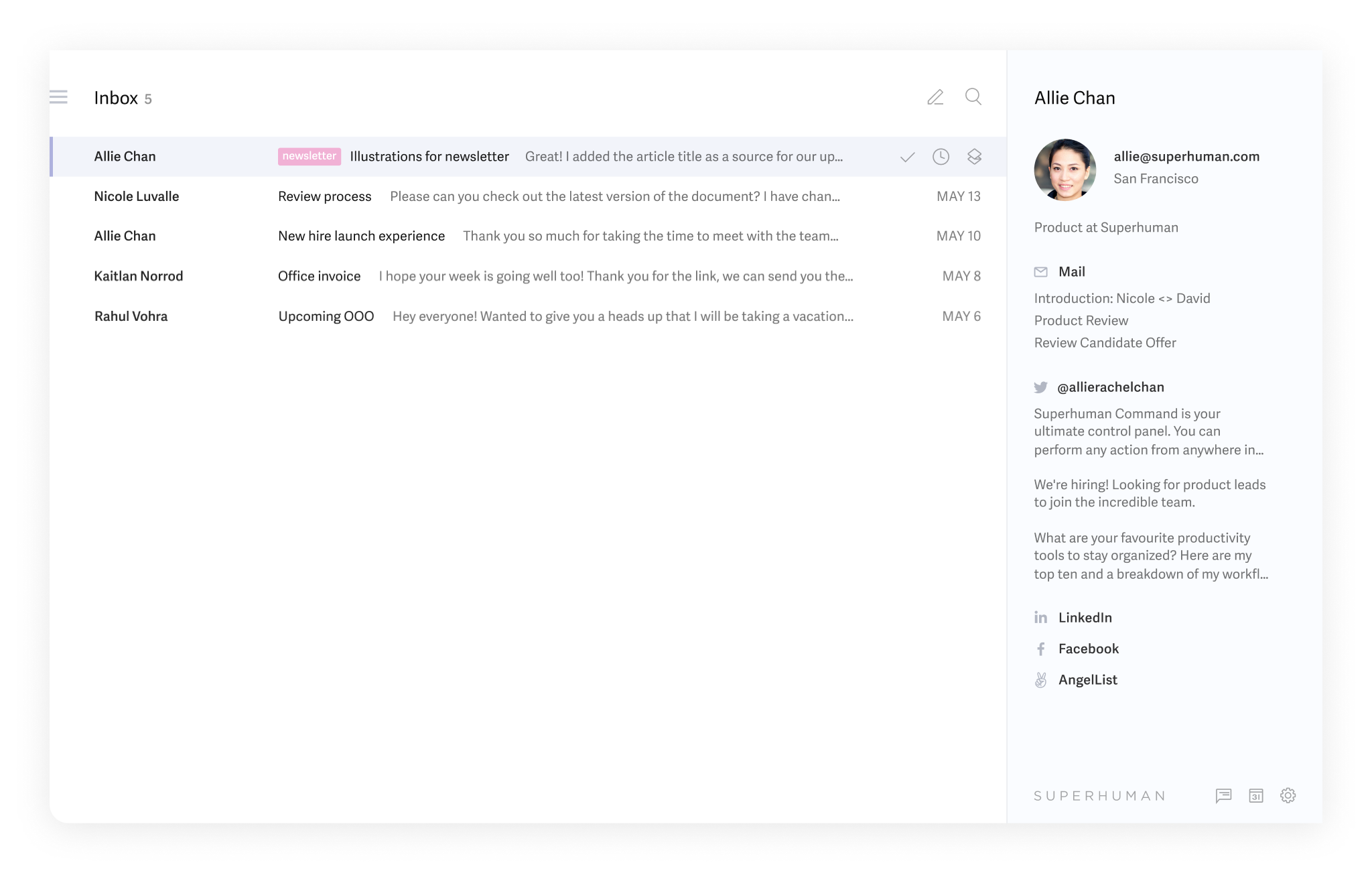
Superhuman is an email app that helps users read, organize, and reply to messages faster. In 2017, the team surveyed people who had recently used it. One question asked: how disappointed would you be if you could no longer use Superhuman?
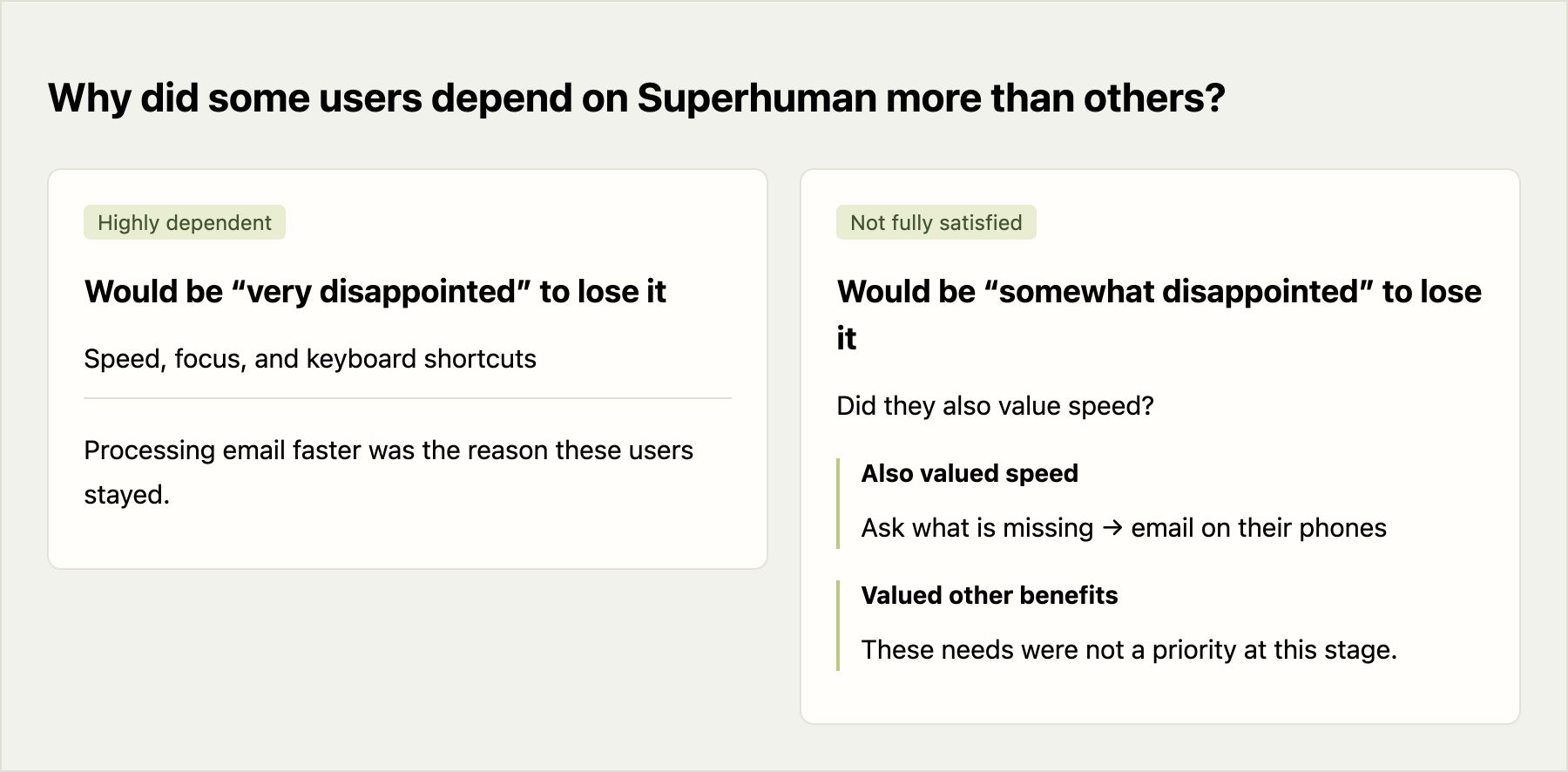
Users who said they would be “very disappointed” often mentioned speed, focus, and keyboard shortcuts. Their answers pointed to a shared priority: spending less time on email.
Some users would be “somewhat disappointed” to lose the app. They found it useful but did not depend on it as much.
The team looked at two groups within these users. One also valued speed. The other cared more about other benefits.
The team asked users who valued speed what was holding them back. One need stood out: email on their phones. At the time, Superhuman was mainly used on computers. A mobile app became a priority.
Some users wanted a different kind of product. Others still wanted to spend less time on email, but needed features Superhuman did not yet offer.
A missing feature does not mean you have the wrong customers. Your target users may need it too. If so, consider building it. Another tutorial cannot make up for a missing mobile app.
The survey only tells you about people who have already tried the product. For those who signed up but barely got started, ask: what were you hoping to do, and what stopped you?
When users want to get started but get stuck
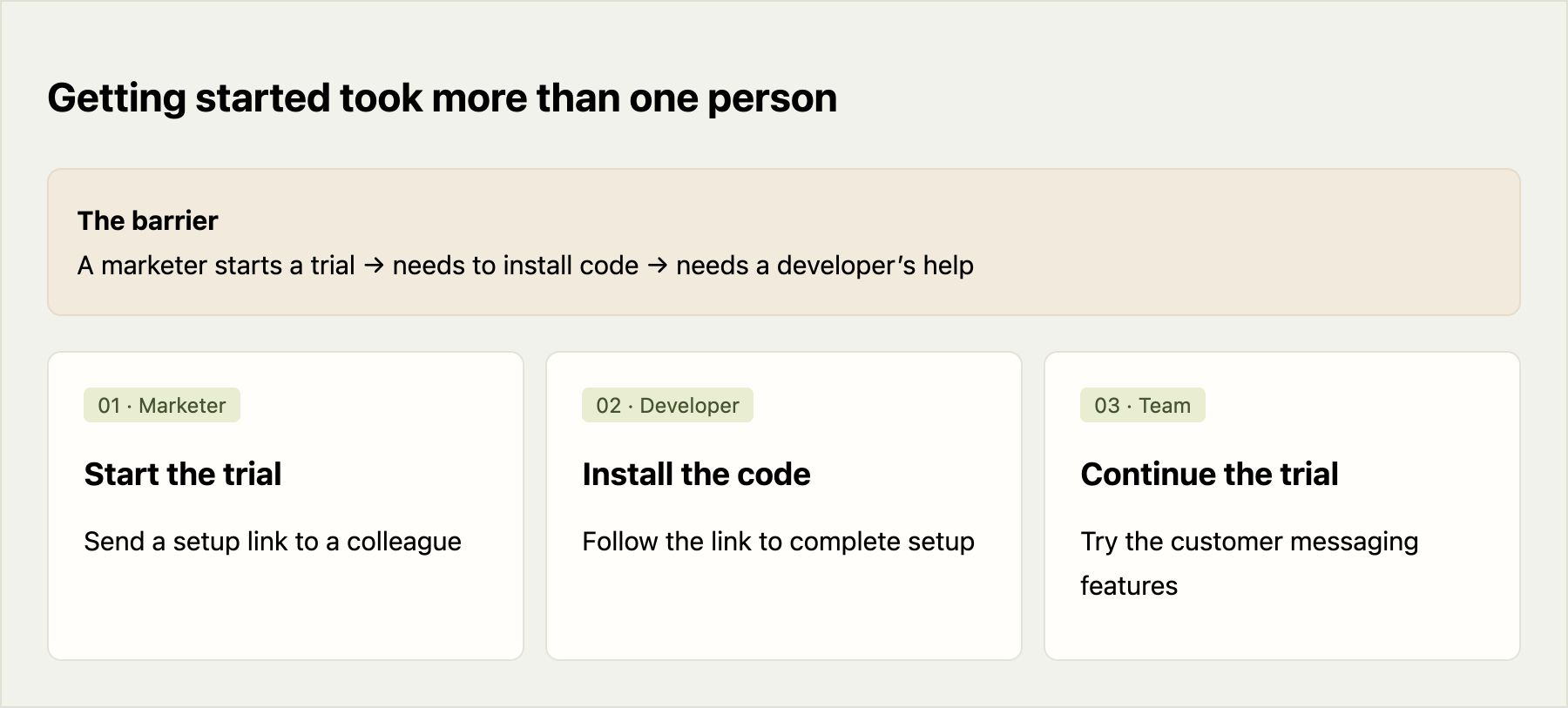
With business software, wanting to try a product is not always enough to get started. A marketer may need a developer’s help to connect a customer messaging tool to the company website.
Intercom lets businesses talk to customers through their website or app. Early users had to install a code snippet to connect customer data. Developers could usually do that themselves.
As more marketers and product managers signed up, more users got stuck at this step.
Intercom offered another way to start: import customer data from a spreadsheet using a CSV file.
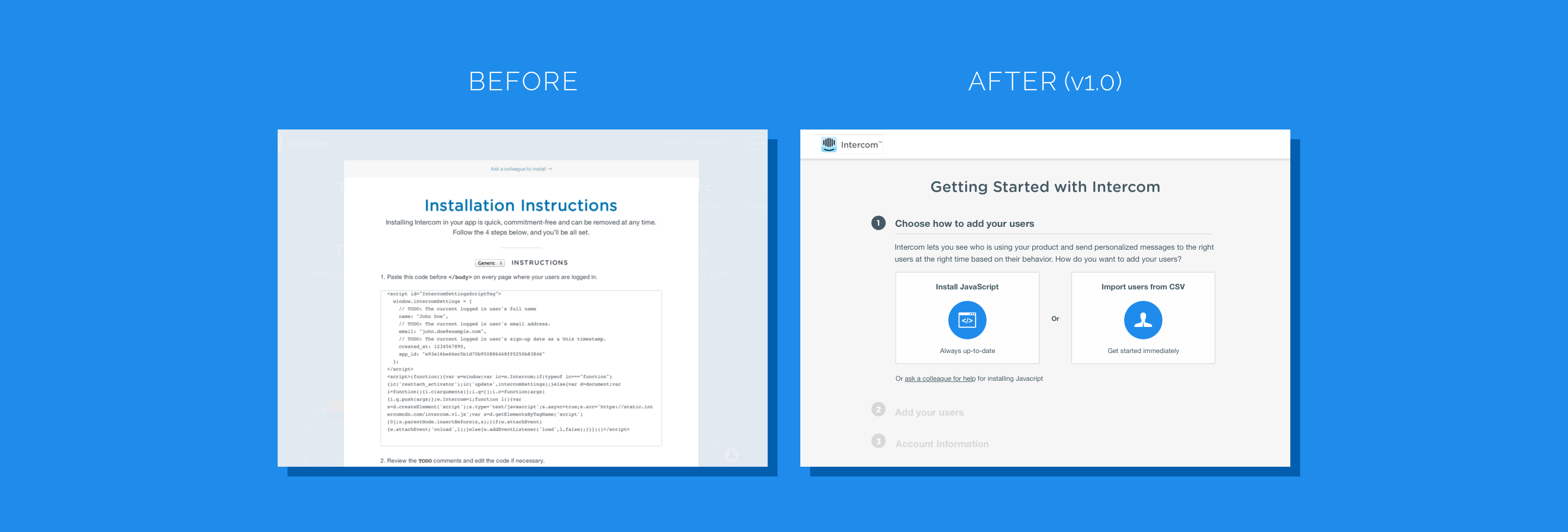
The company shared the results in 2016. The share of marketing site visitors who created an account rose from 30% to 45% in three months.
That showed an improvement in signups. It did not, on its own, show whether more users went on to pay.
The team saw a user copy the installation code into a text file. The user put it on a Trello board for a developer.
This person was trying to move the trial forward. They needed a colleague to handle one step.
Intercom made it easier to bring a colleague into setup. The person who signed up could send their teammate a link. It led straight to the page where help was needed.
An unfinished installation can look like a lack of interest. But this user passed the code to a colleague. They wanted to get started and were finding a way.
If users cannot finish a step alone, help them involve the right colleague. Explain who needs to install the code, provide the data, or approve access.
Removing a few form fields will not solve a task that needs someone else’s help.
Do fewer support requests mean your product is easier to use?
Fewer support requests can mean users have learned what to do. Or they may have given up and left. Both make the support queue quieter. But they mean different things for paid conversion.
In 2021, Intercom tested help links inside its product. Placed beside relevant features, the links took users to articles, videos, or instructions.
The test ran for 28 days. Half of the new self-serve workspaces had no help links. The other half kept them.
Without the links, users contacted support less often. They also searched for help articles less often.
Yet the group with help links had a higher paid conversion rate when the trials ended. The gap was 9 percentage points.
Intercom thought users without guidance explored less of the product. They were less likely to reach steps that raised more questions.
Fewer questions did not mean a better experience. Fewer users paid, too.
Does guidance help users finish their work? Do they pay when the trial ends? Those are the results to watch.
An example beside an unfamiliar feature may help more than a shorter onboarding flow.
But users may know how a feature works and still be unable to do their task. In that case, look at what the product can do. More instructions will not fill a gap in its features.
Compare users who paid with those who did not
Start with users whose trials recently ended. Compare those who paid with those who did not.
Choose users who signed up around the same time, through the same marketing channel. This helps reduce other differences between the groups.
Ask what users wanted to do. Then check what they did in the product.
For those who did not buy, ask why. Did they have no need for the product? Did they get stuck? Or was something else stopping them from paying?
| What you find | What to change first | What to measure next |
|---|---|---|
| Users who did not buy mainly want a different set of features | Review what your marketing promises and whom it targets | Whether new users find the product useful and are willing to pay |
| Target customers commonly need a feature the product does not yet offer | Assess whether to add that feature | Whether adding it makes users more willing to continue |
| They want to use it but get stuck on installation or data import | Improve setup and make it easier to get a colleague’s help | Whether users finish setup, keep using the product, and pay |
| They do not know how to use a feature | Add an example or instructions beside that feature | Whether they finish the task and buy after the trial |
| They know how to use it and want to, but lack budget or approval | Ask about price, budget, and the approval process | Whether they buy once that obstacle is resolved |
A few interviews can help you spot a problem. Watch what users do after a change to see if it helped.
When testing new setup steps, keep your marketing channels as steady as possible. When testing a new audience, keep the product experience steady.
If helping users get started leads them to keep using the product, focus on onboarding.
If they give it a proper try and still want something different, rethink your audience.
If your target customers keep asking for the same missing feature, discuss it in your product plans.